 Merken
 There's something about risotto that stops time. One autumn evening, I stood at my stove while rain pattered against the kitchen window, stirring creamy Arborio rice with nothing but mushrooms and a glass of wine nearby, and realized I'd found the kind of dish that doesn't just fill you—it centers you. The constant rhythm of stirring becomes almost meditative, and somewhere between the third and fourth ladle of broth, the kitchen fills with this earthy, buttery warmth that no fancy restaurant can quite bottle.
I made this for my sister after she'd had one of those long, bruising weeks, and watching her eyes close after the first bite—that moment when food becomes comfort without trying—reminded me why cooking matters. She didn't say much, just reached for seconds, and that said everything.
Ingredients
- Arborio rice: This short-grain variety releases starch as it cooks, creating that signature creamy texture that's the whole point of risotto.
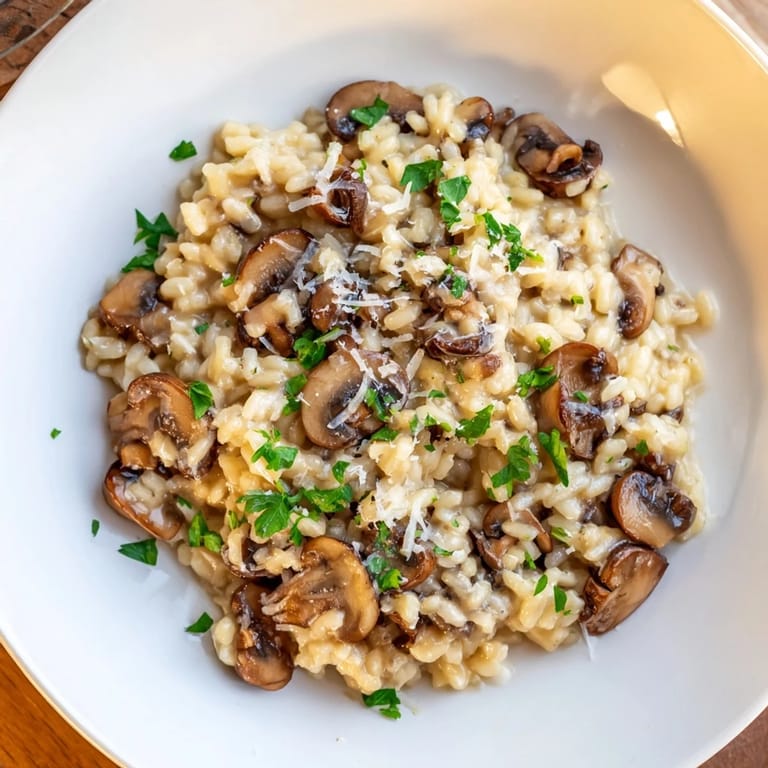
- Cremini or button mushrooms: Sauté them first until they're golden and any moisture evaporates—this concentrates their earthy flavor into something worth tasting.
- Olive oil and butter: Use both; the oil prevents the butter from burning, and together they create a foundation that tastes rich without being greasy.
- Yellow onion and garlic: Cook the onion until it's soft and barely golden, then add garlic for just one minute—no more, or it turns bitter.
- Vegetable broth: Keep it warm in another pot; cold broth stops the rice from cooking evenly and ruins the creamy texture.
- Dry white wine: The acidity cuts through the richness and adds a subtle brightness that Parmesan alone can't provide.
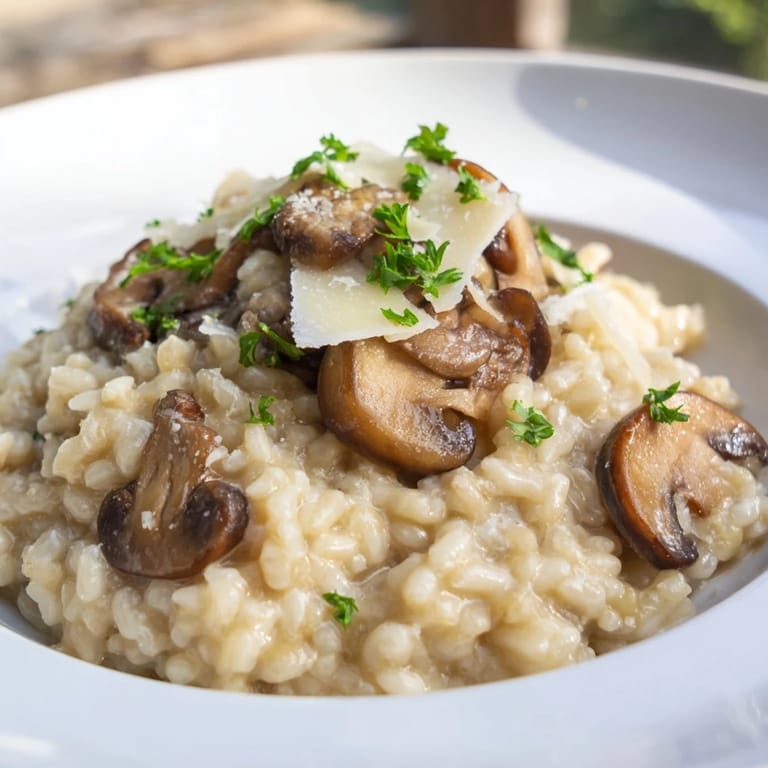
- Parmesan cheese: Grate it fresh if you can; the pre-shredded stuff has anti-caking agents that make the risotto grainy instead of silky.
- Butter (final addition): This is separate from the cooking butter—it's the finishing touch that makes everything taste luxurious.
- Salt and black pepper: Taste as you go; risotto seasons differently depending on how salty your broth is.
Tired of Takeout? 🥡
Get 10 meals you can make faster than delivery arrives. Seriously.
One email. No spam. Unsubscribe anytime.
Instructions
- Sauté the mushrooms until they're golden:
- Heat oil and butter in a large skillet over medium heat, then add sliced mushrooms. Don't stir too much—let them sit for a minute so they brown instead of steam. When they've released their liquid and turned golden (6-8 minutes), set them aside.
- Build your flavor base:
- In the same pan, add chopped onion and cook until it's soft and just barely translucent, about 3 minutes. Add minced garlic and cook for exactly one minute—you want its aroma, not its bitterness.
- Toast the rice grains:
- Stir the Arborio rice into the onions and garlic, cooking for about 2 minutes while stirring. You'll notice the outer edges of the grains turn translucent—this is the signal that they're ready for liquid.
- Deglaze with wine:
- Pour in the white wine and stir constantly until it's mostly absorbed into the rice. This adds acidity and flavor that defines risotto.
- Begin the patient stirring process:
- Add broth one ladle at a time, stirring frequently. Wait until most of the liquid disappears before adding the next ladle—this is what creates creaminess. Continue for 18-20 minutes; the rice should be tender but still have a slight firmness in the center.
- Finish with richness and flavor:
- Stir in the sautéed mushrooms, 2 tablespoons of butter, and grated Parmesan. Taste and adjust salt and pepper, then cook for 2 more minutes. The risotto should flow slightly when you plate it, not stand in a stiff mound.
 Merken
 There was this moment at a dinner party when everyone stopped talking mid-sentence and just ate, and that's when I understood that risotto isn't about impressing people with complexity—it's about the kind of food that speaks for itself through texture and warmth.
Why Fresh Ingredients Matter Here
This dish lives or dies by the quality of what you put into it, because risotto doesn't hide behind sauces or complicated techniques. The mushrooms should smell earthy and fresh, the butter should taste sweet, and the Parmesan should have that slightly grainy, crystalline texture. When you start with good ingredients, every layer comes through—you taste the wine, the broth, the garlic—instead of a muted brown mixture.
Mushroom Variations That Transform the Dish
Button mushrooms are dependable and mild, but cremini mushrooms (which are just mature button mushrooms) have more depth. If you're feeling adventurous, mix in some shiitake or oyster mushrooms toward the end—they'll add an earthiness that makes the whole dish feel more sophisticated. I've also done this with a combination of wild mushrooms I found at the farmer's market, and the flavor became something I couldn't quite name but absolutely craved the next day.
Serving and Pairing Ideas
Risotto is rich enough to stand alone, but it sings with simplicity around it. A crisp green salad with lemon dressing cuts through the creaminess, and a cold glass of Pinot Grigio or Sauvignon Blanc makes the whole meal feel intentional. Some people add a protein—roasted chicken or seared scallops—but I've found that the risotto itself, paired with good bread and a simple salad, becomes the meal you remember.
- Serve immediately after cooking; risotto waits for no one and becomes gluey when cold.
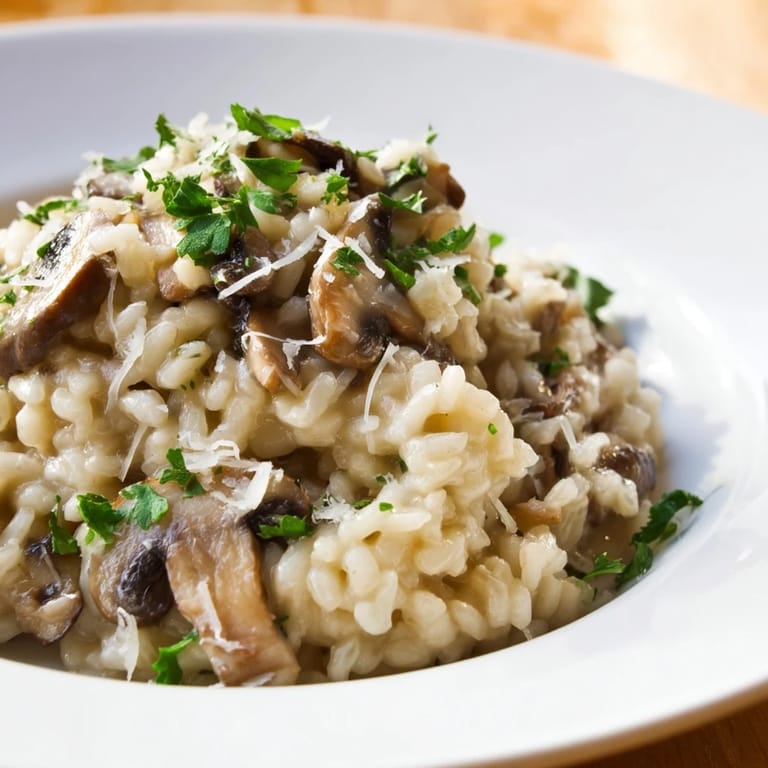
- Grate extra Parmesan over the top and finish with a whisper of fresh parsley if you want color and a hint of green.
- A pinch of good sea salt and a crack of fresh black pepper as garnish elevates even a simple bowl into something special.
 Merken
 This is the kind of dish that becomes part of your cooking life—not because it's complicated, but because it's real. Make it when you need to slow down, when you want to cook for someone who matters, or simply because a Thursday night deserves something warm and unhurried.
Fragen rund um das Rezept
- → Welche Pilzsorten eignen sich am besten?
Cremini oder Champignons sind ideal für ihre zarte Textur und den milden Geschmack. Für intensiveren Geschmack können Wildpilze gemischt werden.
- → Wie gelingt der Reis besonders cremig?
Wichtig ist das langsame Hinzufügen der warmen Gemüsebrühe und häufige Rührbewegungen, damit die Stärke im Arborio-Reis freigesetzt wird.
- → Kann ich Weißwein weglassen?
Ja, statt Weißwein kann etwas zusätzlicher Gemüsefond verwendet werden. Das Aroma verändert sich leicht, bleibt aber köstlich.
- → Wie lange dauert die Zubereitung insgesamt?
Die Zubereitung benötigt ungefähr 45 Minuten, davon 15 Minuten Vorbereitung und 30 Minuten Kochzeit.
- → Welche Beilagen passen gut dazu?
Ein frischer grüner Salat oder geröstetes Gemüse passen hervorragend und ergänzen die cremige Textur des Gerichts.