 Merken
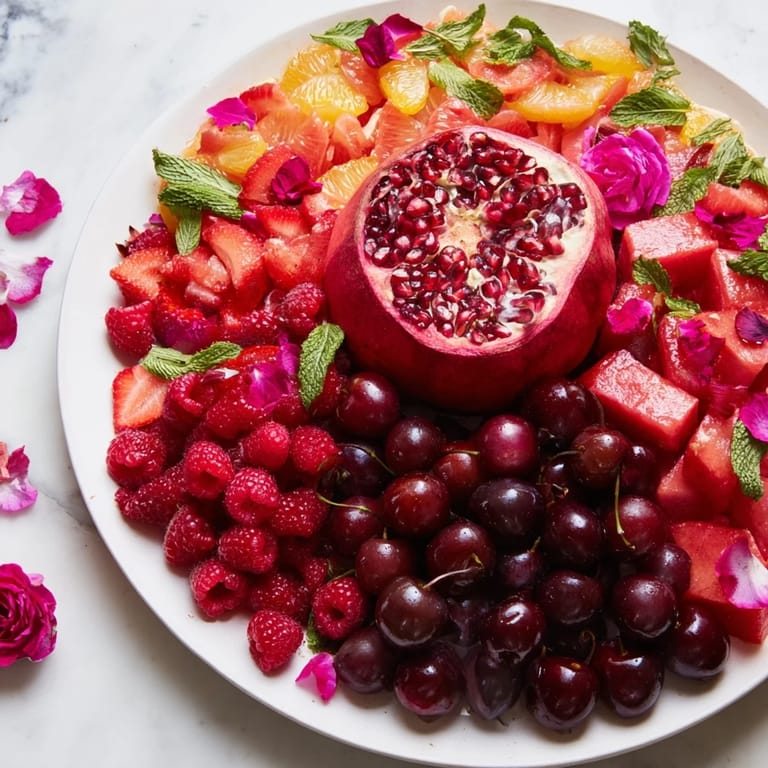
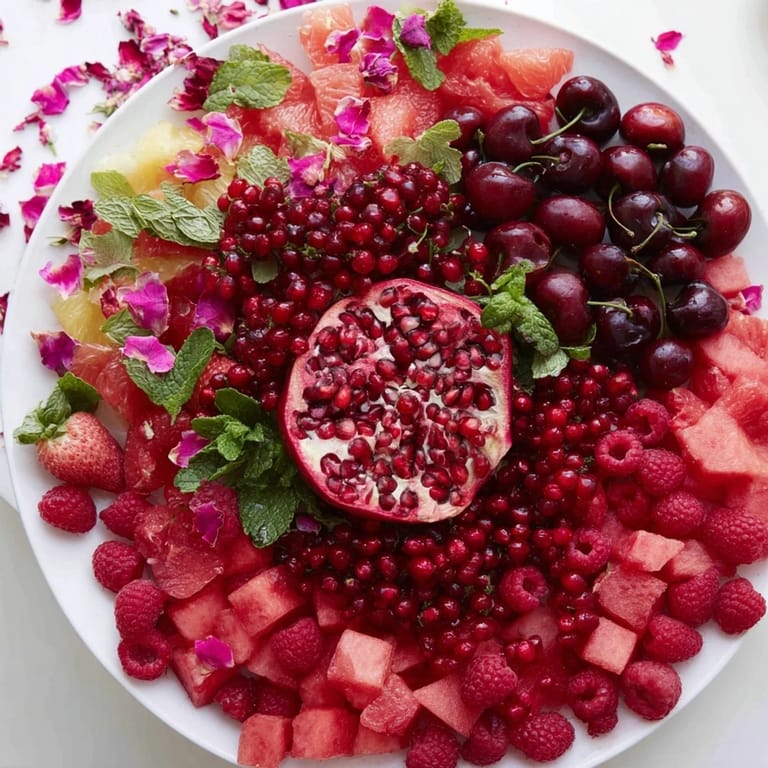
 One afternoon, I was arranging fruit on a platter and stopped mid-slice, struck by how the colors shifted from deep burgundy to blushing pink to nearly white. That moment of staring at the gradient sparked something: what if I built an entire platter around that natural color story? The pomegranate, split open and gleaming in the center, became my anchor point. Now whenever I make this, it feels less like assembling a fruit plate and more like painting with what the season offers.
I served this at a small dinner party last spring, and someone asked if it was almost too pretty to eat. That hesitation lasted maybe ten seconds before everyone reached in. What stuck with me wasn't the compliments, though there were plenty, but watching people slow down while eating—actually tasting the difference between each fruit instead of just grabbing snacks mindlessly.
Ingredients
- 1 large pomegranate, halved: This is your centerpiece, so pick one that's heavy for its size and has thin, papery skin—it means the fruit inside is plump and full of juice.
- Dark cherries and red grapes (1 cup each): These anchor the innermost ring with deep color; fresh ones matter here since they'll be your visual foundation.
- Strawberries and raspberries (1 cup each): The berries are delicate, so add them last to avoid bruising, and if they're already soft, they'll start weeping juice onto lighter fruits.
- Watermelon and pink grapefruit (1 cup each): These introduce moisture and brightness; the grapefruit especially cuts through the sweetness of other fruits.
- Dragon fruit, apple, and pear slices (1 cup each): The dragon fruit brings theatrical flair, while apples and pears need a light squeeze of lime juice within minutes of slicing to stay pristine.
- Fresh mint and edible rose petals (optional): Mint adds aroma and a whisper of flavor; rose petals are purely for drama, but they genuinely transform the platter into something memorable.
Tired of Takeout? 🥡
Get 10 meals you can make faster than delivery arrives. Seriously.
One email. No spam. Unsubscribe anytime.
Instructions
- Set your stage:
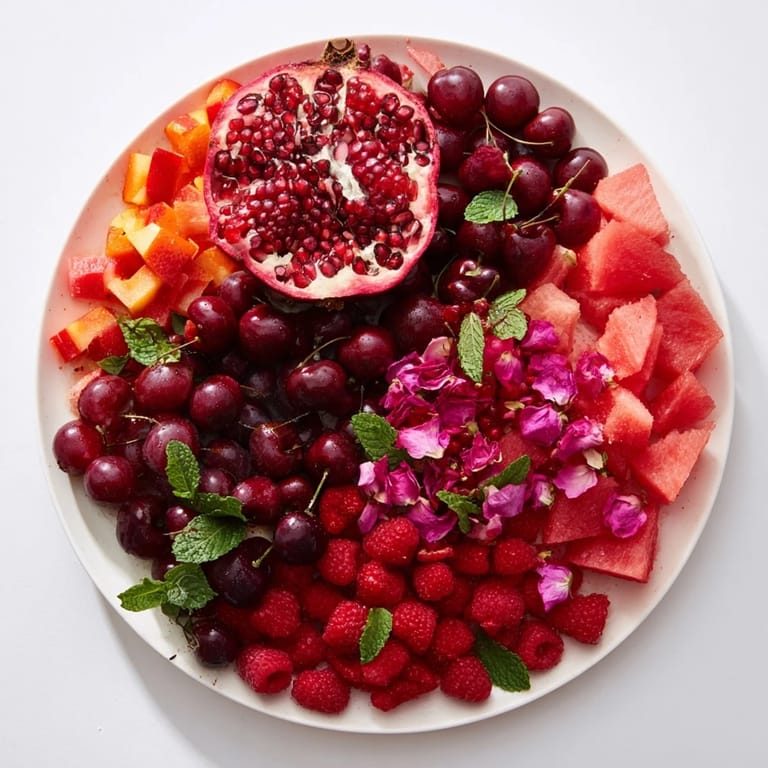
- Place the halved pomegranate cut-side up dead center on your platter. Step back and imagine the radius around it—this is where your color story begins.
- Layer the deepest tones first:
- Arrange cherries, grapes, and strawberries in a loose crescent immediately around the pomegranate. Let them touch and overlap slightly; perfect geometric precision kills the hand-arranged feeling.
- Build the color bridge:
- Move outward with raspberries, watermelon, and grapefruit, nestling each piece so the transition from deep red to blush pink feels inevitable, not choppy.
- Fade to the edges:
- Place dragon fruit, apple slices, and pear slices at the outer edge, creating that pale, almost whispered finish. This is where the eye naturally comes to rest.
- Finish with flourish:
- Scatter mint leaves and rose petals across the entire platter in no particular pattern—they should look like they landed gently, not been placed with tweezers.
- Serve or hold:
- If you're not serving immediately, cover loosely with plastic wrap and refrigerate; the platter actually deepens in visual impact as it chills and the fruits firm up slightly.
 Merken
 I learned later that someone at that dinner party photographed it before eating and sent it to three friends, who then asked me for the recipe. It wasn't the most complicated thing I'd ever made, but it somehow meant more because it started as a small observation about color and turned into something people actually wanted to recreate.
The Geometry of Flavor
What makes this platter work isn't just the colors—it's that you've arranged sweeter fruits closer to the pomegranate and let tartness bloom toward the edges. When someone eats from inside out, they experience a natural flavor arc. When they skip around (which they will), they're creating their own tiny conversations between fruit. There's no wrong way to eat it, which is exactly the point.
Timing and Temperature
This platter lives in that beautiful liminal space where you can prep it hours ahead but assemble it minutes before serving. The fruit stays coldest when it's been refrigerated separately and arranged just before people arrive; the slight condensation on each piece catches light and makes everything look even fresher. If your pomegranate has been sitting out, chill the halves for at least ten minutes before placing them—that temperature contrast keeps everything from feeling wilted.
Making It Your Own
The real gift of this platter is that it invites substitution. Late summer means swapping in peaches and plums; winter asks for pomegranate seeds, persimmons, and blood orange segments. You're not locked into a recipe—you're working with what's at its peak, which means every version you make will be slightly different and feel exactly right for its moment.
- If you can find them, red currants add jewel-like drama and barely any prep.
- A light drizzle of honey or a few edible flowers scattered across the top elevates it if you're serving to impress.
- Chill your platter itself for fifteen minutes before arranging if you have the fridge space; cold surfaces keep fruit fresher longer.
 Merken
 This platter taught me that sometimes the most impressive thing you can bring to the table is simply an arrangement that honors what each ingredient already is. No cooking, no fancy technique—just patience and an eye for color.
Fragen rund um das Rezept
- → Wie wird die Farbgestaltung der Früchte erreicht?
Die Früchte werden von tiefroten Kirschen über rosa Himbeeren bis zu blassen weißen Scheiben in einem fließenden Übergang angeordnet.
- → Kann man die Früchte je nach Saison tauschen?
Ja, je nach Verfügbarkeit eignen sich rote Johannisbeeren, Granatapfelkerne, Litschis oder Pfirsiche als Ersatz.
- → Wie lange dauert die Zubereitung?
Ungefähr 25 Minuten, hauptsächlich zum Schneiden und Arrangieren der Früchte.
- → Welche Garnituren passen dazu?
Frische Minzblätter und essbare Rosenblätter sorgen für Farbe und Aroma.
- → Wie wird das Obst frisch gehalten?
Ein leichter Limettensaft verhindert das Braunwerden von Apfel- und Birnenscheiben.