 Merken
 The first time I truly understood how simple ingredients could transform into something memorable was while standing in my kitchen on a rainy Tuesday, watching carrots caramelize in the oven. The warm, honeyed smell filled the whole space, and I found myself grating fresh ginger almost without thinking, drawn by some instinct that this particular combination needed to exist. That afternoon, I blended those roasted carrots with tahini and lemon, and something clicked—it was vibrant, creamy, and nothing like the heavy dips I'd grown used to making.
I remember bringing this dip to a potluck where everyone was already tired of hummus, and watching someone taste it was like watching them discover something they didn't know they were missing. They came back for seconds, then thirds, and suddenly I was the person known for this one thing. That moment taught me that the smallest recipes often make the biggest impressions, especially when they feel both different and somehow familiar at the same time.
Ingredients
- Carrots, 500g peeled and chunked: These are the hero—roasting them transforms them from ordinary into something with actual depth and sweetness, almost like concentrated carrot candy.
- Fresh ginger, 1 tablespoon peeled and chopped: This is what people taste first without knowing what it is, a warmth that makes everything feel sophisticated and alive.
- Garlic clove, 1 small peeled: Just one, because you want the other flavors to breathe, not to be bullied into the background.
- Extra-virgin olive oil, 2 tablespoons divided: One tablespoon roasts the vegetables into caramelization, the second streams in at the end for silken creaminess that no blender alone could achieve.
- Tahini, 2 tablespoons: The secret binding agent that gives this dip its luxurious body without any dairy, and it whispers sesame undertones that tie everything together.
- Lemon juice, 1 tablespoon: Brightness that cuts through the richness and wakes up every single flavor.
- Honey or maple syrup, 1 teaspoon: A subtle sweetness that rounds the corners and makes the ginger feel even warmer.
- Ground cumin, ½ teaspoon: Earthy and slightly mysterious, it belongs here even if you don't consciously notice it.
- Salt and black pepper, ½ teaspoon and ¼ teaspoon: These are your volume knobs—adjust until the dip tastes like the best version of itself.
Tired of Takeout? 🥡
Get 10 meals you can make faster than delivery arrives. Seriously.
One email. No spam. Unsubscribe anytime.
Instructions
- Heat your oven and prep the vegetables:
- Preheat to 200°C (400°F) and while it's warming, cut your carrots into chunks roughly the size of walnuts—they should be uniform so they roast evenly. Toss them with the single garlic clove, a tablespoon of olive oil, and a pinch of salt on a baking sheet, spreading them so they have room to breathe and caramelize.
- Roast until tender and golden:
- This takes 25 to 30 minutes, and you'll know they're ready when the edges turn amber and a fork slides through without resistance. Let them cool just enough that you can touch them comfortably—they blend better when still warm.
- Combine in the food processor:
- Add your roasted carrots and garlic, the ginger, tahini, lemon juice, honey, cumin, salt, and pepper. Pulse first to break everything down, then let it run until it's completely smooth.
- Stream in oil and adjust texture:
- With the processor still running, drizzle in that remaining tablespoon of olive oil until the dip becomes creamy and luxurious. If it feels too thick, add water a splash at a time—you're looking for something that spreads easily but holds its shape.
- Taste and season one more time:
- This is where the magic lives: a small spoon, one honest taste, and the courage to add another pinch of salt if it needs it. Sometimes the lemon needs just slightly more, sometimes you'll want another whisper of cumin.
- Finish and serve:
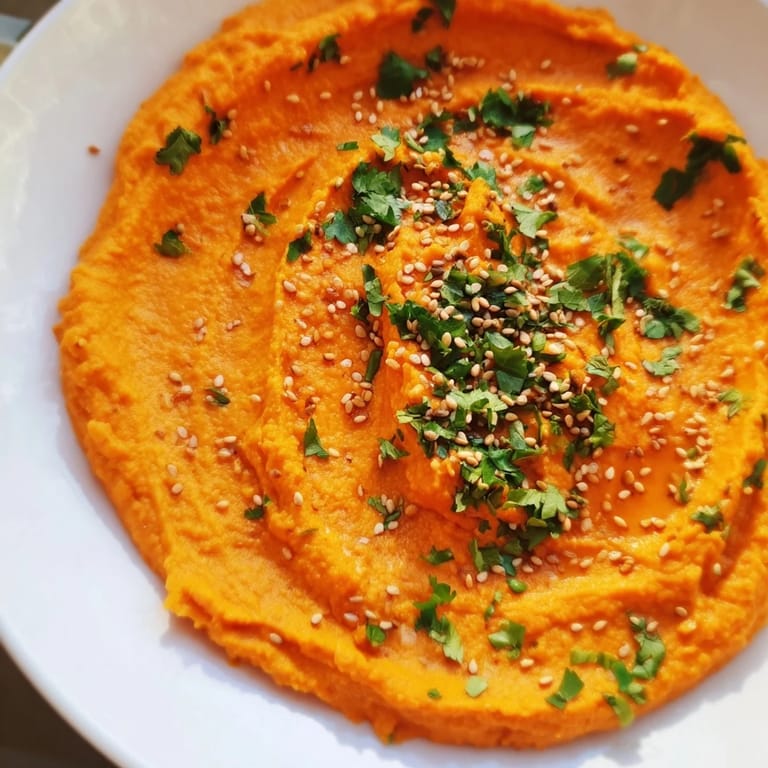
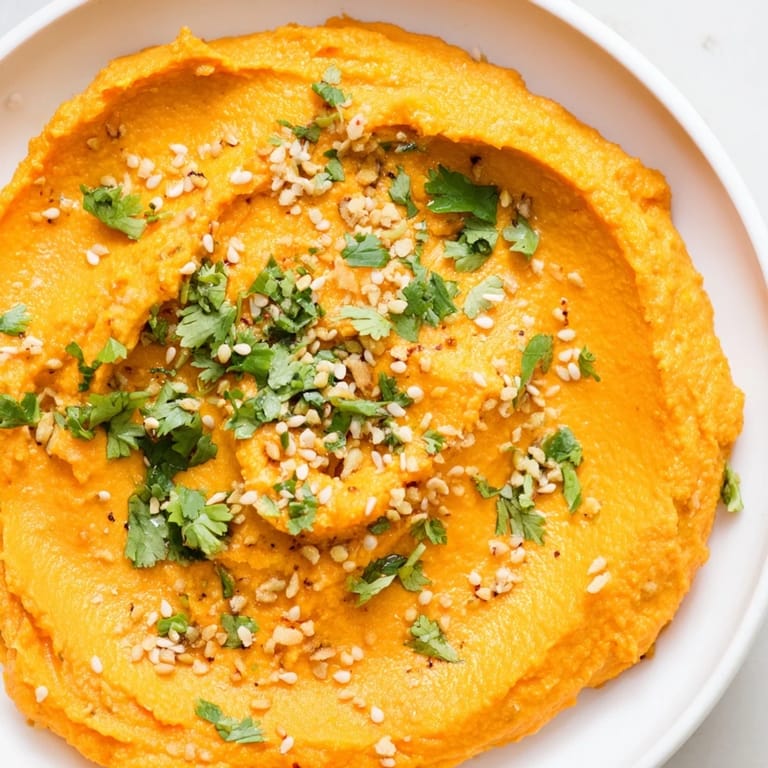
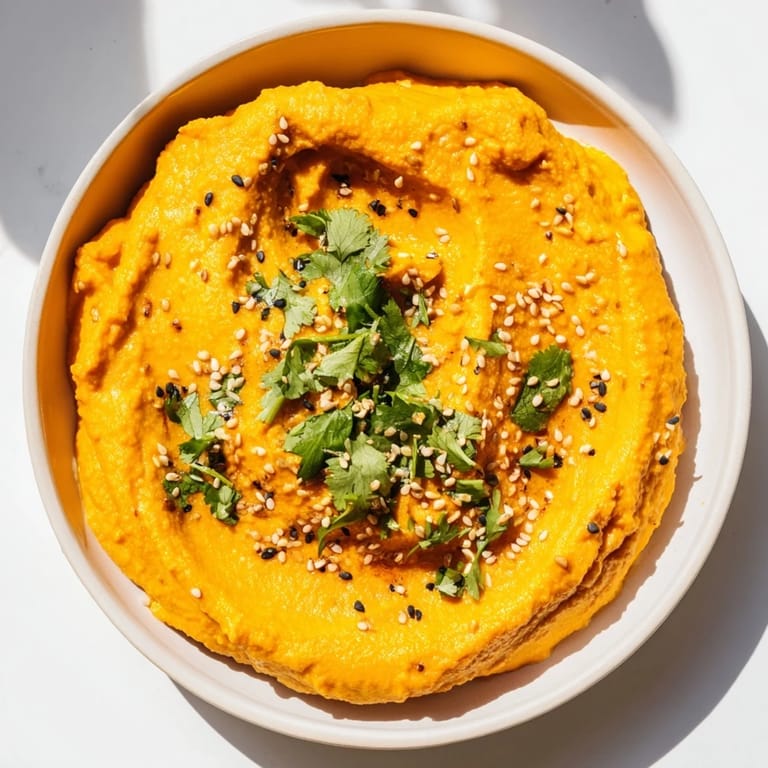
- Transfer to a bowl, scatter cilantro and sesame seeds across the top if you're feeling generous, and surround it with whatever you want to dip—fresh vegetables, pita chips, or even just a spoon.
 Merken
 There was an evening when my neighbor knocked on the door with a bottle of wine and the question whether I had anything interesting to snack on, and this dip turned a random Tuesday into something worth remembering. She ate almost the whole bowl while we talked about nothing important, and that's when I realized certain foods have the quiet power to make moments feel less ordinary.
Why This Dip Works Every Single Time
The secret is that roasting transforms the carrots' natural sugars into something deeper and more complex, while the tahini and ginger create a creamy base that somehow feels both comforting and exciting. It's a combination that works because each ingredient has a specific job: the olive oil makes it silken, the lemon keeps it bright, the cumin adds warmth, and the honey binds everything into a coherent flavor that tastes like it belongs on a restaurant menu. The beauty is that it requires no cooking skill, just an oven and patience.
Flavor Variations You Could Try
I've experimented with swapping the ginger for harissa for heat, or adding roasted beets for earthiness and color, and both work beautifully. Some mornings I've added a tiny amount of cayenne pepper for people who love spice, and once I replaced the tahini with Greek yogurt for a friend with a sesame allergy—it became lighter, almost like a creamy carrot salad in dip form. The framework is forgiving, which means you can make it your own without worrying that you'll ruin it.
Serving Ideas and Pairings
This dip is happiest surrounded by crisp vegetables because the contrast in texture matters—rainbow carrots, snap peas, bell peppers, and cucumber all sing alongside it. I've also used it as a sandwich spread on warm grain bread, and once I served it alongside grilled lamb with a simple salad, and suddenly it felt like the dip had traveled somewhere sophisticated. The point is flexibility: it adapts to whatever you're in the mood for, whether that's casual snacking or something approaching elegant.
- Try it with warm pita or flatbread for a completely different feeling than with raw vegetables.
- A dollop on roasted root vegetables or grain bowls brings the whole meal together visually and flavor-wise.
- If you make extra, it keeps refrigerated for almost a week and tastes even better on day two as the flavors deepen.
 Merken
 This dip has become one of those recipes I make when I want to feel capable in the kitchen without stress, and somehow it always impresses people more than dishes that took three times longer. It's become a kind of quiet confidence on a plate.
Fragen rund um das Rezept
- → Wie lange sollten die Karotten geröstet werden?
Die Karotten sollten 25 bis 30 Minuten im vorgeheizten Ofen bei 200°C geröstet werden, bis sie weich und leicht karamellisiert sind.
- → Kann man den Dip schärfer machen?
Ja, eine Prise Cayennepfeffer gibt dem Dip eine angenehme Schärfe ohne das Aroma zu überdecken.
- → Wofür passt dieser Dip besonders gut?
Er eignet sich hervorragend als Begleitung zu frischem Gemüse, Pita-Chips oder als Brotaufstrich.
- → Kann man Tahini ersetzen?
Für eine mildere Variante kann Tahini durch griechischen Joghurt ersetzt werden, wobei der Dip dann nicht mehr vegan und nicht mehr milchfrei ist.
- → Wie bewahrt man den Dip auf?
Im Kühlschrank hält sich der Dip in einem luftdichten Behälter bis zu drei Tage frisch.