 Merken
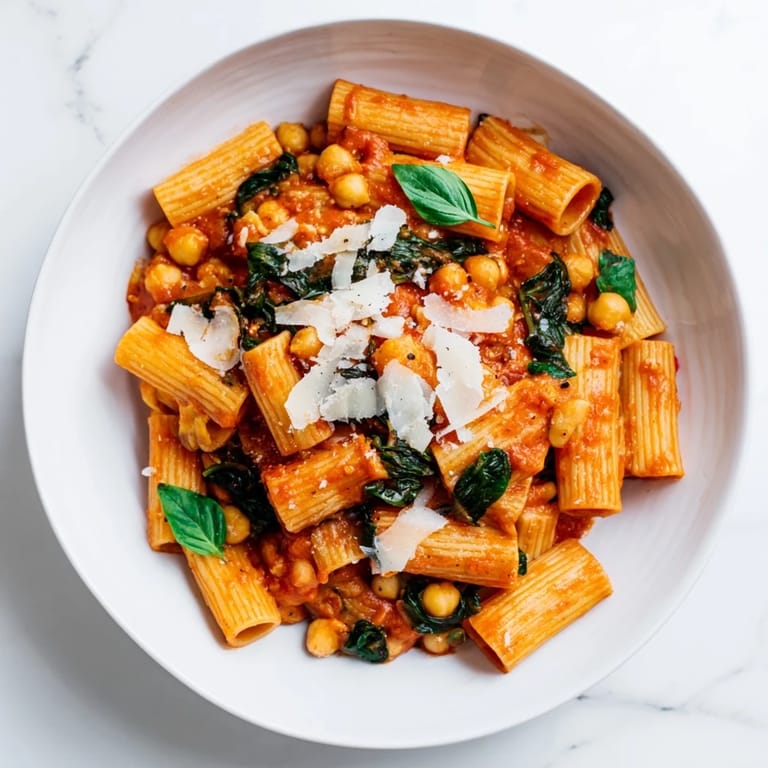
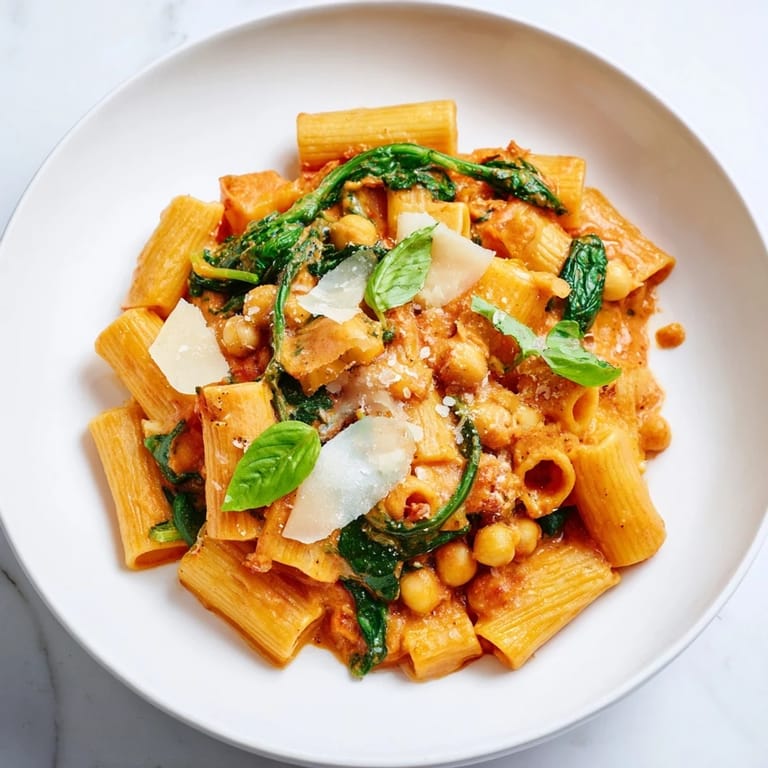
 An evening of unexpected guests and a nearly empty pantry led me to discover this dish by accident. I'd planned something entirely different, but when my neighbor mentioned she was vegetarian, I rifled through my cupboards and found canned chickpeas, spinach, and cream. What emerged from that improvisation became something I now make deliberately, often on nights when I want comfort without fuss.
The first time I made this for my sister, she asked for seconds before finishing her first plate, which rarely happens. She said it tasted like something that took all day, which made me laugh because I'd stirred it together between answering emails. That moment shifted how I thought about cooking, that maybe the simplest dishes are sometimes the ones people remember most.
Ingredients
- 350 g short pasta (penne, rigatoni, or fusilli): The shape matters more than you'd think, the ridges or tubes catch the sauce so nothing slides off your fork.
- 2 tbsp olive oil: Good olive oil makes a difference here since it's not hidden under heavy seasonings.
- 1 medium yellow onion, finely chopped: Take time with this, the smaller the pieces the more evenly they soften and sweeten.
- 3 cloves garlic, minced: Fresh garlic releases its sweetness when cooked gently, don't let it brown or it turns bitter.
- 1 can chickpeas, drained and rinsed: Rinsing removes the starchy liquid, which keeps the sauce silky instead of gummy.
- 1 can diced tomatoes: San Marzano cans taste noticeably better if you can find them, though any crushed tomato works.
- 100 ml vegetable broth: This keeps the sauce from becoming too thick too quickly, giving you time to build flavor.
- 1 tsp dried oregano and 1/2 tsp dried thyme: These are your backbone flavors, they're what make this taste Mediterranean without any fussing.
- 1/2 tsp crushed red pepper flakes (optional): A whisper of heat balances the cream beautifully, but leave it out if you prefer gentle.
- Salt and black pepper: Taste as you go, the sauce deepens in flavor as it simmers.
- 120 ml heavy cream or plant-based cream: This is where the magic happens, the moment everything becomes luxurious.
- 40 g grated Parmesan cheese: Use a microplane to grate it fresh if you have one, pre-grated doesn't melt the same way.
- 120 g fresh baby spinach: It wilts in seconds, so add it last and don't stir it too much or you'll bruise the leaves.
- Fresh basil and extra Parmesan for garnish: These final touches wake everything up, they're not decoration they're flavor.
Tired of Takeout? 🥡
Get 10 meals you can make faster than delivery arrives. Seriously.
One email. No spam. Unsubscribe anytime.
Instructions
- Bring pasta water to life:
- Fill a large pot with salted water, make it taste like the sea. Bring it to a rolling boil before dropping in your pasta, stir immediately so nothing sticks together.
- Build the aromatic base:
- While pasta cooks, warm olive oil in a skillet over medium heat until it moves freely when you tilt the pan. Add onion and let it soften for 3 to 4 minutes, listen for a gentle sizzle but no aggressive crackling.
- Invite the garlic:
- Once onion turns translucent at the edges, add minced garlic and cook for exactly 1 minute, the kitchen will smell incredible but stop before it browns.
- Layer in the chickpeas and tomatoes:
- Stir in your drained chickpeas and canned tomatoes, along with the broth and dried herbs. This is where the dish begins to feel real, let it simmer uncovered for 10 minutes so flavors can meld.
- Finish the pasta:
- Drain pasta, reserving that starchy water like liquid gold, it helps the sauce cling properly. Reserve about 120 ml.
- Create the cream sauce:
- Turn heat to low, pour in cream and grated Parmesan, stir constantly until everything is silky and the cheese dissolves completely. This should take about 2 minutes.
- Wilt the spinach:
- Add your fresh spinach and stir gently for 2 to 3 minutes, it seems like too much spinach until it isn't.
- Marry pasta with sauce:
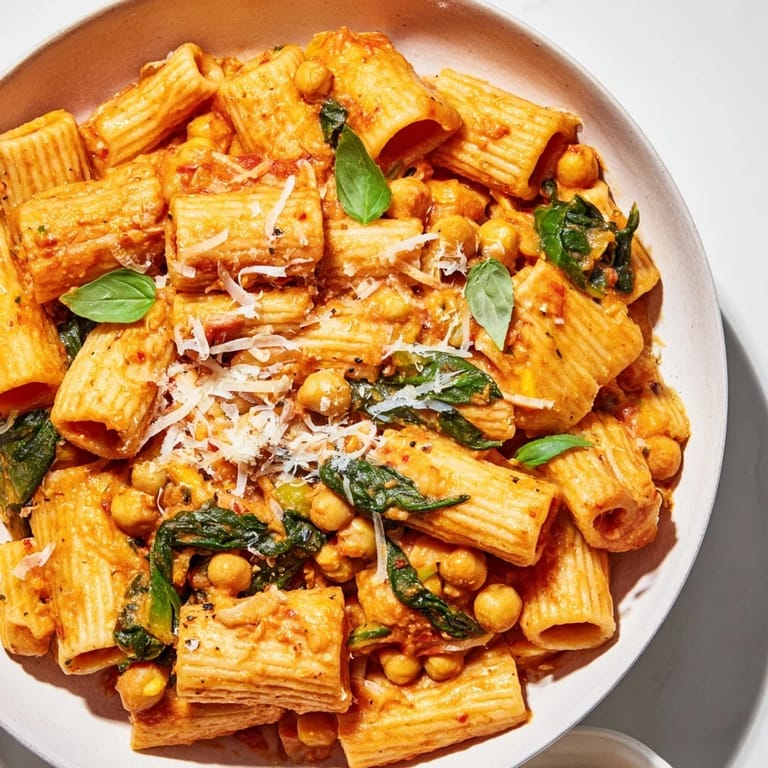
- Add drained pasta to the skillet and toss everything together, use some of that reserved pasta water to loosen the sauce to your preferred consistency. The pasta water is starchy and helps the sauce coat each piece evenly.
 Merken
 I served this to a friend who'd been having a rough week, and watching her face when she tasted the first bite reminded me that food does something beyond nutrition. It creates a moment where everything else pauses.
Why This Dish Became a Favorite
There's something about the way pasta absorbs cream and tomato together that feels almost indulgent, yet it asks so little of you. The chickpeas do the heavy lifting protein-wise, meaning you're eating something genuinely nourishing without the weight. Over time this became the recipe I make when I want to cook something that tastes like care without stress.
Adapting It to Your Taste
The framework here is flexible enough that you can play with it. Sun-dried tomatoes add a concentrated sweetness that some nights feels exactly right, roasted red peppers bring a gentle smokiness. Fresh herbs like basil or parsley stirred in at the end change the whole mood. One evening I added a handful of nutritional yeast and it made everything taste a little nuttier without any dairy at all.
The Right Pasta Matters
Short tube or ridged pastas work best because they hold the sauce instead of letting it slide off onto your plate. Penne, rigatoni, and fusilli all work beautifully, while long noodles tend to slip away from the creamy mixture. I've learned that the shape of pasta is actually one of the most underestimated decisions you make when cooking, it changes everything about how a sauce feels in your mouth.
- If using gluten-free pasta, cook it a full minute before the package says since it softens quickly once sauce is added.
- For a vegan version, use plant-based cream and cashew cream works even better than store-bought alternatives.
- Kale substitutes beautifully for spinach if that's what you have, just cook it an extra minute since it's tougher.
 Merken
 This is the kind of recipe that proves the most comforting meals don't require hours or a long list of obscure ingredients. It's proof that sometimes the most memorable food comes from working with what you have on hand.
Fragen rund um das Rezept
- → Wie lässt sich die Sauce besonders cremig machen?
Die Kombination aus Sahne und Parmesan sorgt für eine sämige Sauce. Durch ein langsames Einrühren auf niedriger Hitze wird die Cremigkeit optimal erreicht.
- → Kann man frischen Spinat durch andere Zutaten ersetzen?
Kale oder Mangold sind passende Alternativen, die ebenfalls gut in der Sauce welken und eine ähnliche Textur bieten.
- → Wie koche ich die Pasta al dente für dieses Gericht?
Die Pasta sollte in ausreichend gesalzenem Wasser nach Packungsanleitung gekocht werden, bis sie bissfest, aber nicht weich ist.
- → Wie lässt sich das Gericht vegan zubereiten?
Statt Sahne und Parmesan können pflanzliche Alternativen wie vegane Sahne und Hefeflocken verwendet werden, um eine ähnliche Cremigkeit zu erzielen.
- → Welche Gewürze passen gut zur Tomaten-Kichererbsensauce?
Oregano, Thymian und eine Prise Chiliflocken ergänzen die Aromen perfekt und bringen eine mediterrane Würze ins Gericht.