 Merken
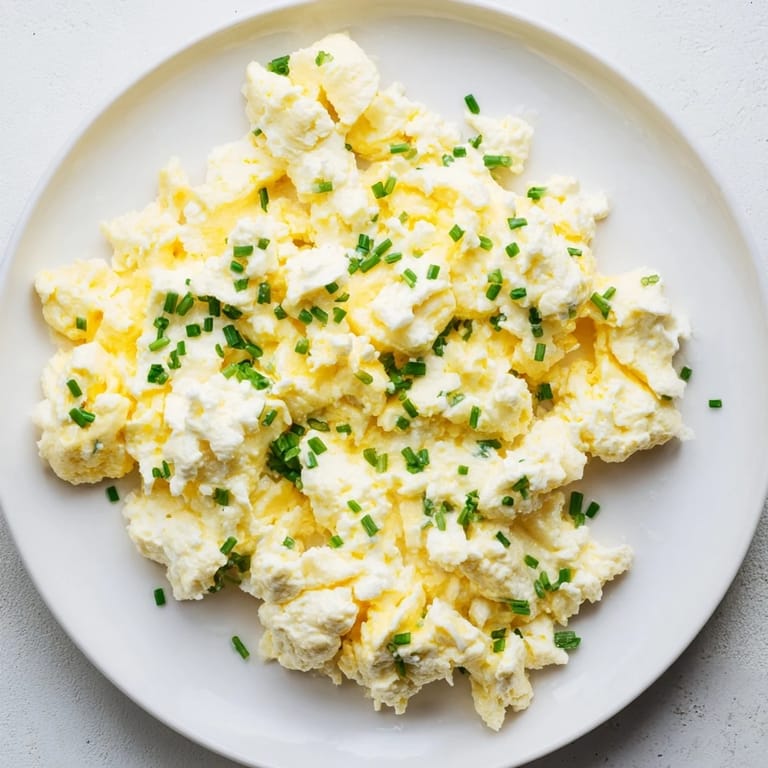
 There was a Tuesday morning when my usual scrambled eggs felt boring, and I remembered my mom mentioning cottage cheese in everything. I grabbed a container from the fridge almost as a joke, whispered it into the eggs, and something magical happened—they became impossibly fluffy and creamy without any heavy feeling. That single decision turned breakfast into something I actually looked forward to making.
I made these for my roommate who was training for something or other, and she took one bite and asked if I'd added cream or something fancy. When I told her it was just cottage cheese, she made me write down the recipe on a sticky note that's still on her fridge. That moment taught me that the best recipes are the ones that feel like you're keeping a secret with someone.
Ingredients
- 4 large eggs: Room temperature is slightly better, but honestly, cold eggs work fine too—don't stress about this detail.
- 1/3 cup cottage cheese (preferably full fat): Full fat is non-negotiable here; it's where all the creaminess lives, and low-fat versions leave you with a thinner, sadder scramble.
- 1 tablespoon milk or cream: This loosens everything up and helps the eggs set more gently, creating those signature soft curds.
- 1/4 teaspoon salt and 1/8 teaspoon freshly ground black pepper: Season as you taste, because some cottage cheeses have salt built in already.
- 1 tablespoon unsalted butter: Don't skimp here—salted butter can oversalt everything before you even taste it.
- Chives or parsley for garnish (optional): A small handful of fresh herbs makes it look intentional and taste bright.
Tired of Takeout? 🥡
Get 10 meals you can make faster than delivery arrives. Seriously.
One email. No spam. Unsubscribe anytime.
Instructions
- Combine and whisk:
- In a medium bowl, whisk the eggs with cottage cheese, milk, salt, and pepper until everything looks slightly frothy and the cottage cheese curds are mostly broken down. Don't over-whisk; you want gentle clouds of air, not a completely uniform mixture.
- Melt the butter:
- Heat a nonstick skillet over medium-low heat and let the butter melt slowly, watching for it to smell nutty and bubble gently around the edges. This is the moment that separates creamy scrambled eggs from dry, rubbery ones.
- Pour and pause:
- Pour the egg mixture into the hot skillet and let it sit completely undisturbed for about 20 seconds, just long enough to see a thin set forming on the bottom. This initial stillness is what creates those gorgeous large, soft curds.
- Gentle stir and sweep:
- Using a spatula, gently sweep from the edges toward the center, folding the set curds over the liquid eggs with slow, deliberate movements. Think of it like you're tucking in a blanket, not scrambling frantically.
- Cook until creamy:
- Continue stirring occasionally for about 2 to 3 minutes total, watching for the moment when the eggs go from glossy and loose to just barely set but still soft to the touch. Pull them off the heat just before you think they're done, because they'll keep cooking from residual heat.
- Plate and serve:
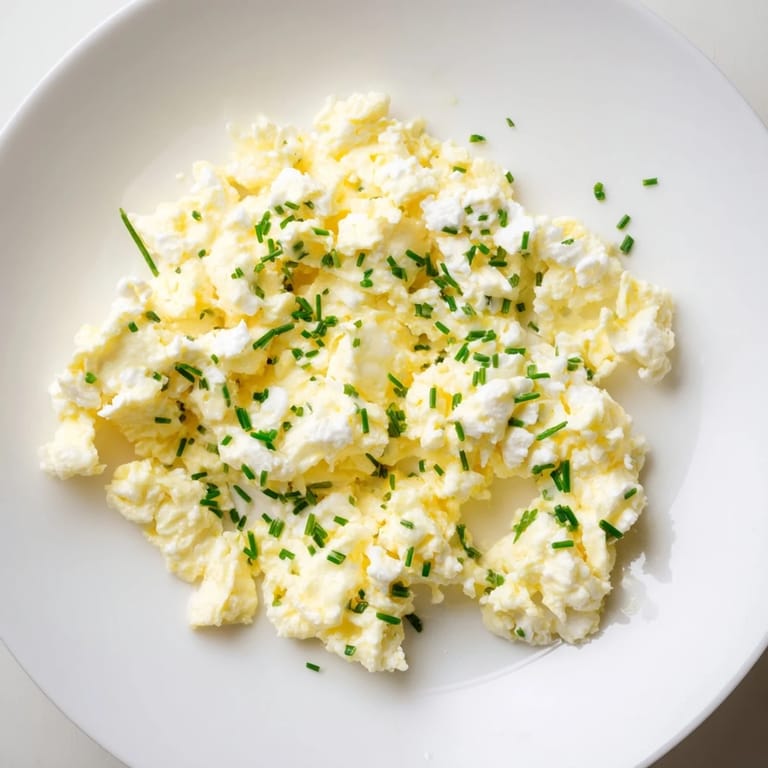
- Transfer immediately to warm plates, scatter the fresh herbs on top if you have them, and eat right away while everything is still steaming.
 Merken
 One Sunday, I made these for someone I was trying to impress, and halfway through eating, they asked if this was something I did every morning. I realized in that moment that the best recipes aren't complicated—they're just honest ones that show you care about how someone's day starts. These eggs became that for me.
Why Cottage Cheese Changes Everything
Most people think of cottage cheese as something that belongs in salads or side dishes, but it's actually a scrambled egg game-changer. The curds add body and creaminess without making things greasy, and the protein content means these eggs stay satisfying for hours. Once you try them this way, regular scrambled eggs feel incomplete.
The Texture You're Aiming For
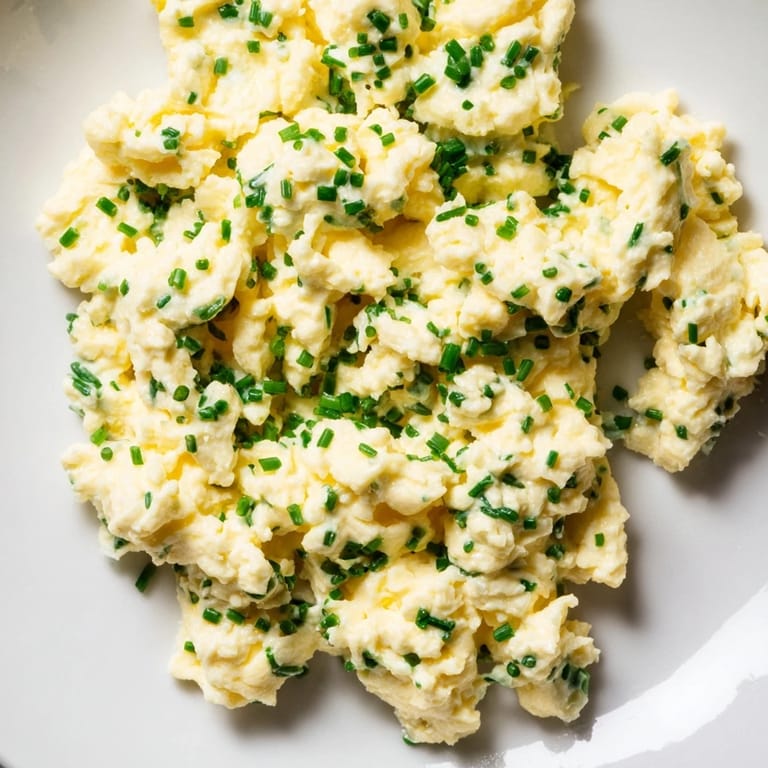
The perfect scrambled eggs should look soft and slightly glossy when you pull them off the heat, almost like wet velvet. If they look completely set and matte, you've already overcooked them; if they're too liquid, they need another 20 seconds. That perfect middle moment is fleeting, which is why low heat is so important—it gives you time to catch it.
Simple Ways to Build on This
The beauty of this base recipe is that it's a blank canvas for whatever you're in the mood for. Sautéed spinach, diced tomatoes, smoked salmon, or even just shredded cheese stirred in at the end all work beautifully without overwhelming the fluffy texture. The cottage cheese acts as a stabilizer, so your additions won't make things watery or dense.
- Add a handful of sautéed spinach or smoked salmon right before serving for more substance without heaviness.
- Keep shredded cheddar or feta nearby to stir in at the very last second, letting the heat melt it without cooking it separately.
- Serve alongside whole-grain toast or fresh avocado slices to turn breakfast into something that feels like you've made an effort.
 Merken
 These eggs remind me that the best breakfast isn't about how fancy the ingredients are—it's about taking five minutes to make something that tastes like someone really cared. Start your day with these, and you'll feel it.
Fragen rund um das Rezept
- → Wie macht Cottage Cheese die Eier fluffiger?
Der hohe Feuchtigkeitsanteil und die cremige Struktur des Cottage Cheese lockern die Eiermasse auf, sodass die Eier beim Garen besonders luftig und zart werden.
- → Kann ich andere Milchprodukte statt Cottage Cheese verwenden?
Alternativ funktionieren Quark oder Ricotta, sie verändern jedoch die Textur und den Geschmack leicht, da Cottage Cheese besonders körnig und cremig ist.
- → Wie verhindere ich, dass die Eier zu trocken werden?
Wichtig ist schonendes Garen bei mittlerer bis niedriger Hitze und ständiges, sanftes Rühren, damit die Eier cremig bleiben.
- → Welche Kräuter passen gut zu dieser Eimischung?
Frische Schnittlauch, Petersilie oder Kresse ergänzen die cremige Textur und setzen frische Akzente.
- → Wie kann ich das Gericht proteinreicher machen?
Zusätzlicher geriebener Käse wie Cheddar oder Feta kann vor dem Servieren untergehoben werden und steigert den Eiweißanteil.