 Merken
 There's something about the first warm scone of spring that makes you understand why the British perfected afternoon tea. I stumbled onto my version years ago when a friend's grandmother handed me one still steaming from her Aga, and I realized that the secret wasn't in doing anything fancy—it was in doing everything gently. The butter had to stay cold, the dough had to stay untouched, and the timing had to be exact. Since then, these scones have become my answer to almost every spring gathering.
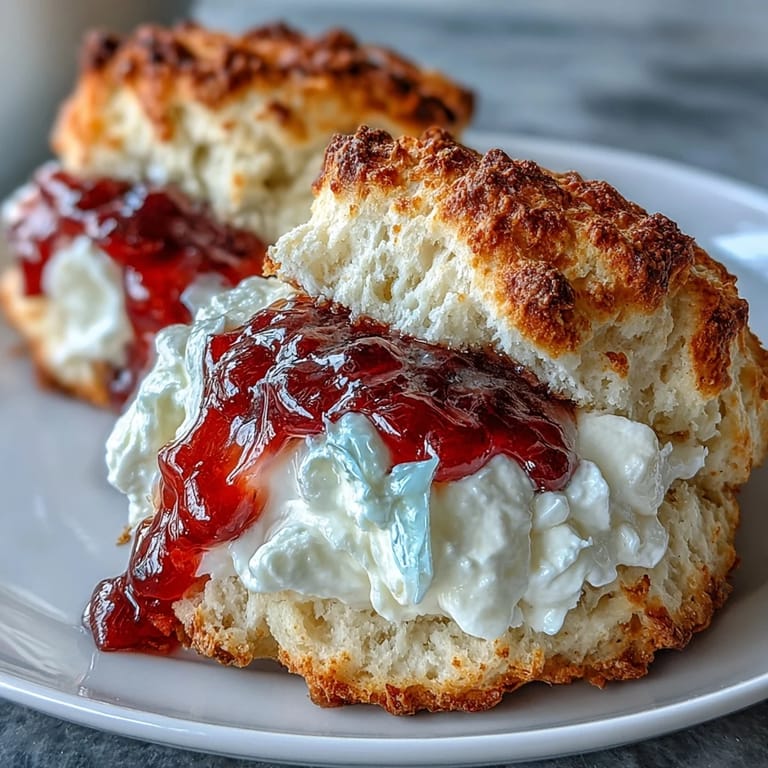
Last May, I made a triple batch for my neighbor's book club, and what I hadn't expected was how the kitchen smelled so good that three people arrived early just following their noses. We split them warm with jam still slightly warm from the jar, and someone actually asked for the recipe before tasting anything else. That's when I knew these weren't just scones—they were the kind of thing that changes how people feel about an ordinary Tuesday afternoon.
Zutaten
- All-Purpose Flour (250 g): This is your foundation, and it needs to be fresh—old flour can make scones feel dense and tough, so if yours has been sitting around, this is the time to replace it.
- Kalte Butter (115 g): The cold pieces are what create those lovely pockets of steam and tenderness, so cut it into cubes right before mixing and keep your hands quick.
- Whole Milk (160 ml): Use full-fat milk if you have it because the richness matters, and that extra egg yolk helps bind everything without overworking the dough.
- Granulated Sugar (50 g): Just enough sweetness to complement the jam without making these feel like dessert.
- Baking Powder (1 tablespoon): This is your leavening agent, and it needs to be fresh—old baking powder won't give you that perfect rise.
- Fine Sea Salt (1/2 teaspoon): A pinch that nobody notices but everybody tastes, making the butter and vanilla sing.
- Large Egg and Pure Vanilla Extract: The egg binds while the vanilla adds a subtle warmth that separates homemade from ordinary.
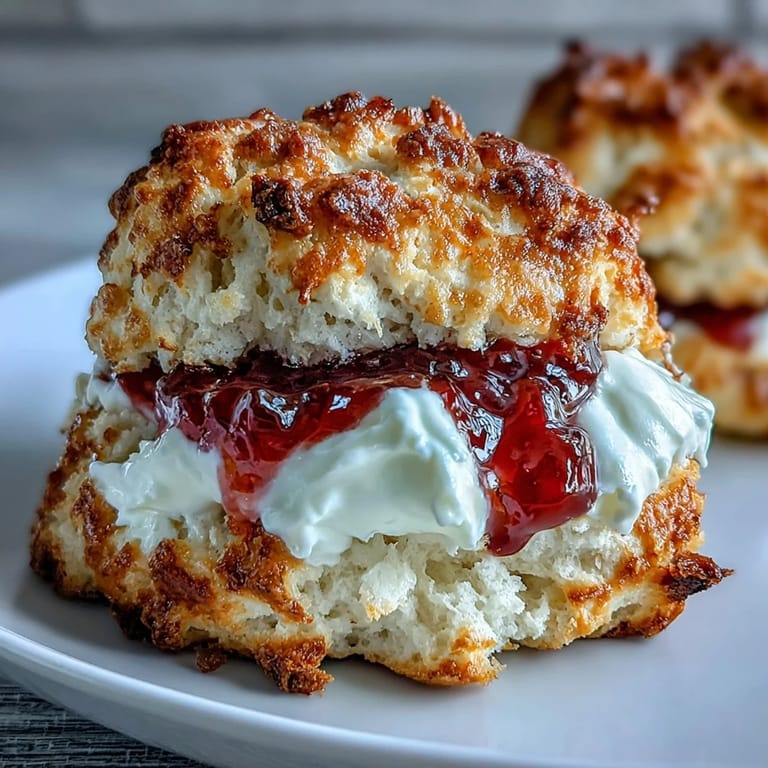
- Clotted Cream and Quality Fruit Jam: These aren't sides—they're the whole point, so choose ones that genuinely taste good on their own.
Tired of Takeout? 🥡
Get 10 meals you can make faster than delivery arrives. Seriously.
One email. No spam. Unsubscribe anytime.
Anleitung
- Ofen vorbereiten und vorbereiten:
- Heat your oven to 425°F and line a baking sheet with parchment paper so the bottoms bake evenly without sticking or burning.
- Dry ingredients combine:
- Whisk flour, sugar, baking powder, and salt together in a large bowl, making sure the baking powder is fully distributed so your scones rise evenly.
- Butter into crumbs:
- Add your cold, cubed butter and either use a pastry cutter or your fingertips to work it in until everything looks like coarse breadcrumbs—this texture is essential, so don't rush it. Your hands should feel dry, not greasy.
- Wet ingredients combine:
- In a separate bowl, whisk milk, egg, and vanilla together until completely combined and smooth.
- Bring it together:
- Pour the wet mixture into the dry ingredients and use a fork to gently combine—you want the dough to just come together, not to be smooth or elastic. This is where restraint wins: overworked dough becomes tough, underworked dough stays tender.
- Shape the dough:
- Turn the dough onto a lightly floured surface and pat it gently into a 1-inch-thick round, handling it as little as possible.
- Cut and arrange:
- Use a 2.5-inch cutter to stamp out 8 rounds, and if you need to re-roll scraps, do it gently and quickly—the warmth of your hands softens the butter, which is something to work against, not with.
- Brush and bake:
- Place scones on the prepared baking sheet, brush the tops lightly with milk for a golden finish, and bake for 12-15 minutes until risen and golden brown. You'll know they're done when the edges feel firm and the smell fills your kitchen.
- Cool slightly and serve:
- Transfer to a wire rack and let them cool just enough to handle—serving them while still warm is the whole point.
 Merken
 One afternoon while making these for my daughter's school friends, I accidentally dropped an entire bowl of dough and had to start over with ten minutes left before arrival. What surprised me was that the second batch, made faster and with less fussing, turned out better than the first. Sometimes the best scones come from letting go of perfection and just trusting the process.
Die Kunst des richtigen Mischens
The temptation when baking is to think more effort equals better results, but scones are the exception that proves the rule. I once watched a pastry chef make these with almost careless speed, barely touching the dough, and the result was impossibly tender. The science is simple: gluten development makes bread chewy and scones tough, so your hands should be in and out of the dough like you're stealing something. Every second you spend mixing is working against the texture you want.
Timing und Temperatur
A hot oven is essential because scones need to puff up quickly before the butter fully melts—that's what creates those tender layers. If you open the oven door to peek (and I've done this), you release steam that never comes back, so set a timer and trust it. I learned this the hard way after a batch came out flat and sad because I kept checking them like an anxious parent.
Variations und Geschmacksrichtungen
Once you master the basic version, the real fun begins because this dough takes direction beautifully. I've added a pinch of lemon zest for brightness, replaced the vanilla with almond extract for a different kind of warmth, and even crumbled in a handful of dried fruit when spring berries weren't available. The formula stays the same; you're just changing the flavor story you want to tell.
- Try replacing half the milk with heavy cream for a richer, more luxurious crumb that feels almost indulgent.
- Swap jam for lemon curd or a good honey for something less sweet and more complex.
- Make a double batch and freeze the unbaked scones on a tray, then bake straight from frozen with just an extra minute or two—fresh scones anytime without the prep work.
 Merken
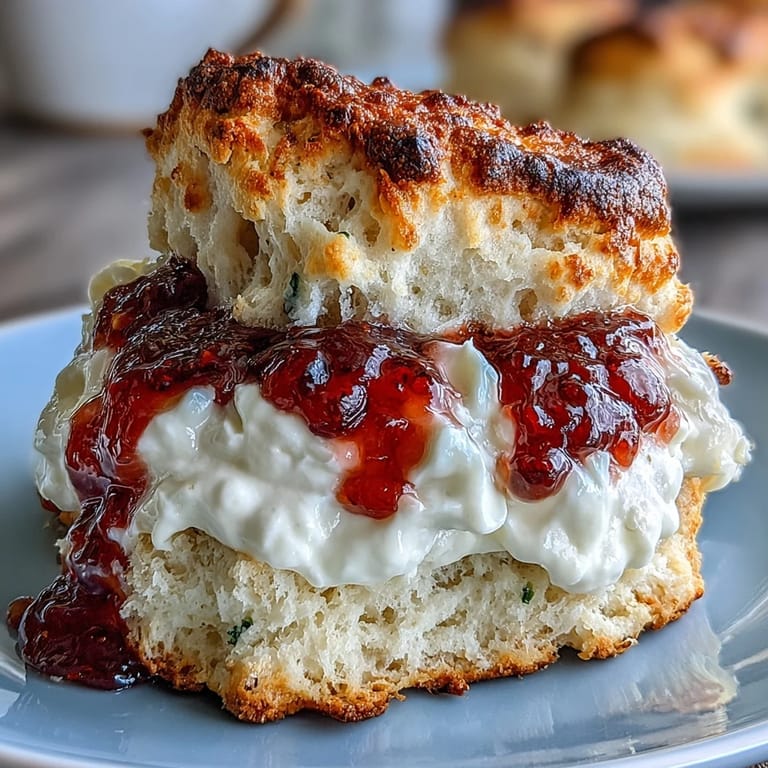
 These scones have taught me that the simplest things often matter most, and that slowing down to do something gently usually wins over rushing. Serve them warm with good cream and jam, and watch what happens.
Fragen rund um das Rezept
- → Wie bleibt der Teig besonders zart?
Kalte Butter wird in kleine Stücke geschnitten und schnell mit dem Mehl vermischt, damit der Teig nicht zu warm wird. So bleibt die Textur locker und zart.
- → Welchen Vorteil hat das Bestreichen mit Milch vor dem Backen?
Das Bestreichen sorgt für eine goldbraune, glänzende Kruste und verbessert das Gesamtbild der Scones.
- → Kann ich die Marmelade durch andere Aufstriche ersetzen?
Ja, zum Beispiel passen Zitronencreme oder Honig wunderbar als fruchtige Alternative.
- → Wie bewahre ich die übrig gebliebenen Scones am besten auf?
Scones lassen sich gut einfrieren. Vor dem Servieren können sie im Ofen leicht aufgebacken werden, um Frische zu bewahren.
- → Welche Zutaten sorgen für die optimale Konsistenz der Scones?
Die Kombination aus Mehl, Backpulver, Zucker, Butter, Milch, Ei und Vanilleextrakt sorgt für ein perfekt lockeres Ergebnis.