 Merken
 Manti appeared in my kitchen on a grey Tuesday afternoon when a friend's grandmother sent along a container of frozen dumplings with careful instructions scribbled on the lid. I'd never made them before, but something about those tiny, hand-pinched parcels demanded I try. The first batch stuck together in the boiling water, a small disaster that taught me patience—and the importance of salted water. But when I finally plated them with that cooling yogurt sauce and the butter just beginning to brown, I understood why this dish has traveled centuries across kitchens and tables.
I made this for four friends on a Sunday when winter felt endless, and the kitchen filled with steam and the smell of butter and paprika. We sat around the table longer than we meant to, everyone asking for seconds, and somehow the conversation shifted from complaints about the cold to plans we actually wanted to make. Food does that sometimes—it creates space for better thinking.
Ingredients
- All-purpose flour: Two cups gives you enough dough to work with, and the small amount of kneading creates just the right texture for thin, delicate sheets.
- Salt: Use half a teaspoon in the dough and quarter teaspoon in the yogurt sauce—it amplifies every other flavor without announcing itself.
- Large egg: This binds everything together and helps the dough sheets stay supple as you roll and cut them.
- Water: Start with half a cup and add more only if the dough feels dry; every kitchen is different.
- Turkish white cheese: If you can't find it, feta works, though Turkish cheese is slightly milder and creamier—worth seeking out if you have a specialty shop nearby.
- Ricotta cheese: This softens the filling and prevents it from becoming grainy or too salty when the cheeses mix.
- Fresh parsley: Chopped fine, it adds a green brightness that lifts the whole dish.
- Black pepper: A quarter teaspoon is gentle; add more only if you're confident in your taste preferences.
- Greek yogurt: The thickness matters here—it should coat the manti, not pool beneath it.
- Garlic clove: One, minced fine, is enough to wake up the yogurt without overpowering it.
- Unsalted butter: Three tablespoons melt into something almost silken when the spices bloom in it.
- Paprika and Aleppo pepper: Together they create warmth and a gentle heat that builds as you eat, rather than hitting you all at once.
Tired of Takeout? 🥡
Get 10 meals you can make faster than delivery arrives. Seriously.
One email. No spam. Unsubscribe anytime.
Instructions
- Mix the dough and let it rest:
- Combine flour and salt in a bowl, make a small well, crack your egg into it, and pour in water. Mix with your hands until a shaggy dough forms, then knead for five minutes until smooth and elastic. It should feel alive beneath your fingers, not stiff. Cover and let it rest for twenty minutes while you prepare everything else.
- Prepare the filling while dough rests:
- Crumble the Turkish cheese and ricotta together in a bowl, then fold in the finely chopped parsley and black pepper. Taste it—your filling should taste bright and just slightly salty, like something you'd want to eat on its own.
- Make the yogurt sauce:
- Stir the minced garlic into Greek yogurt along with salt until completely smooth. Set it aside and try not to taste it too many times (though honestly, you will).
- Roll and cut the dough:
- On a lightly floured surface, roll the dough as thin as you can—about two millimeters, almost translucent if possible. You want thin enough to cook quickly but not so thin it tears. Cut into one-and-a-half-inch squares with a sharp knife or pastry wheel.
- Fill and seal each manti:
- Place about half a teaspoon of cheese filling in the center of each square, then pinch all four corners together above the filling. You're creating a tiny sleeping bag of cheese. They should be small enough to eat in one or two bites.
- Boil the manti in batches:
- Bring a large pot of generously salted water to a rolling boil. Add manti in batches—don't crowd the pot or they'll stick together. They'll float when done, which takes five to seven minutes, and they should be tender without falling apart.
- Toast the spiced butter:
- While manti cook, melt butter in a small pan over medium heat. Stir in paprika and Aleppo pepper and let them sizzle for thirty seconds until the whole kitchen smells like a spice market.
- Plate and serve immediately:
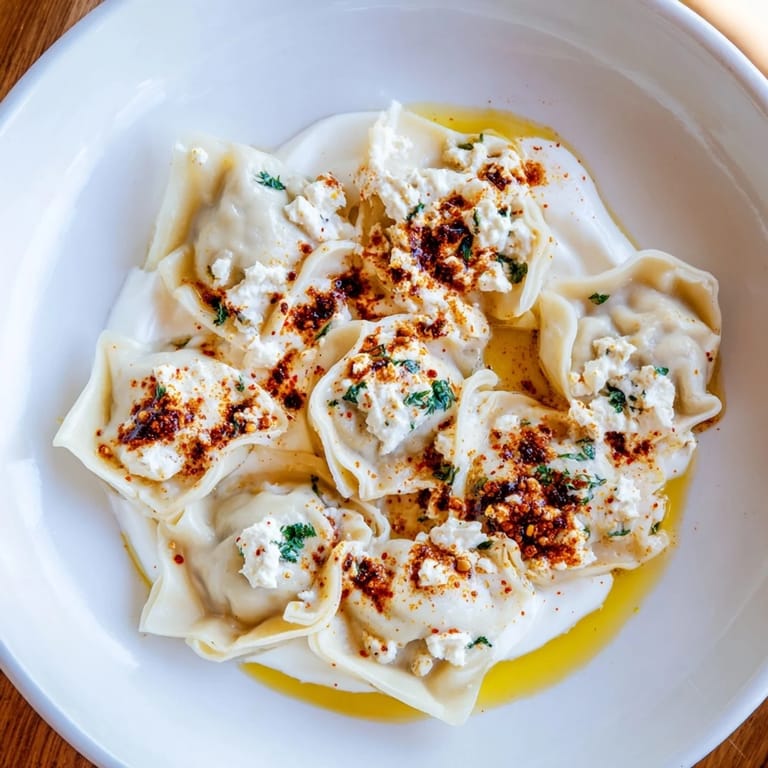
- Drain manti well, arrange on plates, spoon yogurt sauce over each serving, and drizzle with the spiced butter while everything is still warm. The heat matters here—cold manti lose their charm.
 Merken
 These dumplings taught me that Turkish food isn't about complexity—it's about balance, about cool against warm, about knowing when to stop. My friend's grandmother would probably have laughed at my first attempts, but I think she'd recognize the care in trying.
The Secret to Thin Dough
The dough wants to be thin, and the only way to achieve that is to believe it won't tear. I used to be tentative with the rolling pin, worried about holes, which meant I'd overcompensate and create a thick, heavy sheet. Then one afternoon, I just committed to it—rolled with confidence, and the dough responded. It's almost like the dough can sense hesitation. Once you understand that, rolling becomes meditative rather than stressful, and you end up with sheets delicate enough that you can almost see through them.
Why the Yogurt Matters
The yogurt isn't just a topping—it's the cooling element that makes the warm cheese and butter sing. Greek yogurt is thicker and more tangy than regular yogurt, and that tanginess is essential. It doesn't dissolve into the plate; it stays as this lovely contrast layer between the crisp-tender manti and the melted spiced butter. Some people add more garlic, but I've found that one clove minced fine is exactly right—enough to be noticed, not enough to dominate.
Making Ahead and Freezing
You can absolutely make a double batch and freeze the manti uncooked on a baking sheet before transferring them to a container. They'll keep for weeks, and there's something genuinely helpful about reaching into your freezer and knowing you have the ingredients for an impressive, warming meal. Just add a minute or two to the cooking time when they come straight from the freezer.
- Freeze manti on a sheet first so they don't clump together in storage.
- The yogurt sauce and spiced butter are best made fresh, but you can prepare them while the manti cook.
- Serve with fresh herbs—parsley, mint, or even dill—for a final brightness.
 Merken
 Manti is the kind of dish that rewards attention and care, and asks very little in return. Make it once, and you'll want to make it again.
Fragen rund um das Rezept
- → Wie wird der Teig für Manti zubereitet?
Der Teig besteht aus Mehl, Salz, Ei und Wasser. Er wird geknetet, bis er glatt und elastisch ist, dann 20 Minuten ruhen gelassen.
- → Welche Käse werden für die Füllung verwendet?
Eine Mischung aus türkischem Weißkäse oder Feta und Ricotta, verfeinert mit Petersilie und etwas schwarzem Pfeffer.
- → Wie wird die Joghurtsauce zubereitet?
Griechischer Joghurt wird mit fein gehacktem Knoblauch und Salz vermischt, bis eine glatte Sauce entsteht.
- → Wie lange werden die gefüllten Teigtaschen gekocht?
Im sprudelnd kochenden Salzwasser etwa 5 bis 7 Minuten, bis sie an die Oberfläche steigen und zart sind.
- → Was ist das Besondere an der gewürzten Butter?
Butter wird mit Paprika und Aleppo-Pfeffer leicht erhitzt, um ein aromatisches, würziges Finish zu erzielen.