 Merken
 The first time I made this bowl, I was scrolling through video after video of effortlessly aesthetic meals, and something about the combination of sticky salmon and bright orange juice just stopped me mid-scroll. I had gochujang in my fridge from a forgotten Korean cooking phase, an avocado getting soft on the counter, and suddenly I was heating the oven. What surprised me most wasn't how good it tasted, but how the kitchen smelled—that warm, complex fusion of sesame and citrus that made me want to immediately cook it again.
I made this for a friend who swore they didn't like spicy food, and watching them go quiet mid-bite—then immediately take another—was worth every minute of prep. The gochujang didn't feel aggressive or punishing; it was balanced, rounded out by the orange juice and honey in a way that made even skeptics come back for seconds.
Ingredients
- Salmon fillets (150g each): Look for bright pink flesh that doesn't smell overly fishy; skin-on is traditional, but removing it makes for a gentler texture against the glaze.
- Gochujang: This Korean chili paste is the soul of the dish—not just heat, but funk and depth that transforms everything it touches.
- Freshly squeezed orange juice: Bottled works in a pinch, but fresh juice adds a brightness that bottles can't quite capture.
- Soy sauce: Don't skip this; it's the anchor that ties the sweetness and spice together.
- Honey: It caramelizes under the broiler and gives you that sticky, almost candied surface.
- Rice vinegar: A tiny splash that keeps the glaze from feeling one-note.
- Sesame oil: Toasted is non-negotiable here—it adds a nutty depth that raw sesame oil can't match.
- Fresh ginger and garlic: Minced fresh, not powdered; they brighten the whole glaze and make it taste alive.
- Short-grain rice: Warm, freshly cooked rice will soak up the glaze that drips down and turn each bite into comfort.
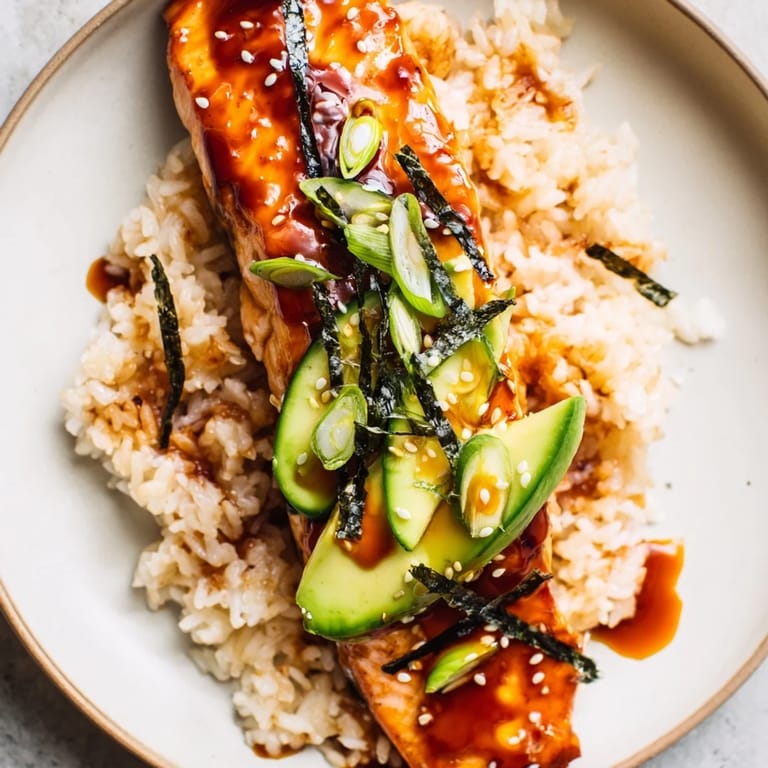
- Cucumber, avocado, nori, sesame seeds, scallions: These aren't just toppings—they're texture and freshness that cut through the richness of the salmon and make every spoonful interesting.
Tired of Takeout? 🥡
Get 10 meals you can make faster than delivery arrives. Seriously.
One email. No spam. Unsubscribe anytime.
Instructions
- Set up your workspace:
- Preheat the oven to 200°C and line a tray with parchment paper while you gather everything else. This five minutes of prep work prevents scrambling later.
- Season and position the salmon:
- Pat the salmon dry, season both sides with salt and pepper, and lay them on the tray skin-side down. Dry salmon means the glaze will stick better.
- Build the glaze:
- In a mixing bowl, whisk gochujang with orange juice, soy sauce, honey, rice vinegar, sesame oil, ginger, and garlic until it's completely smooth with no lumps. Taste it straight from the spoon—it should make you pause and smile.
- First glaze and bake:
- Brush half the glaze over the salmon with a pastry brush, getting into every crevice. Bake for 12 to 14 minutes until the flesh is just opaque and flakes apart with gentle pressure.
- Prepare the components:
- While the salmon bakes, slice your cucumber paper-thin, halve and slice the avocado, cut the nori into strips, and mince your scallions. Keep the rice warm.
- Sticky finish (optional but recommended):
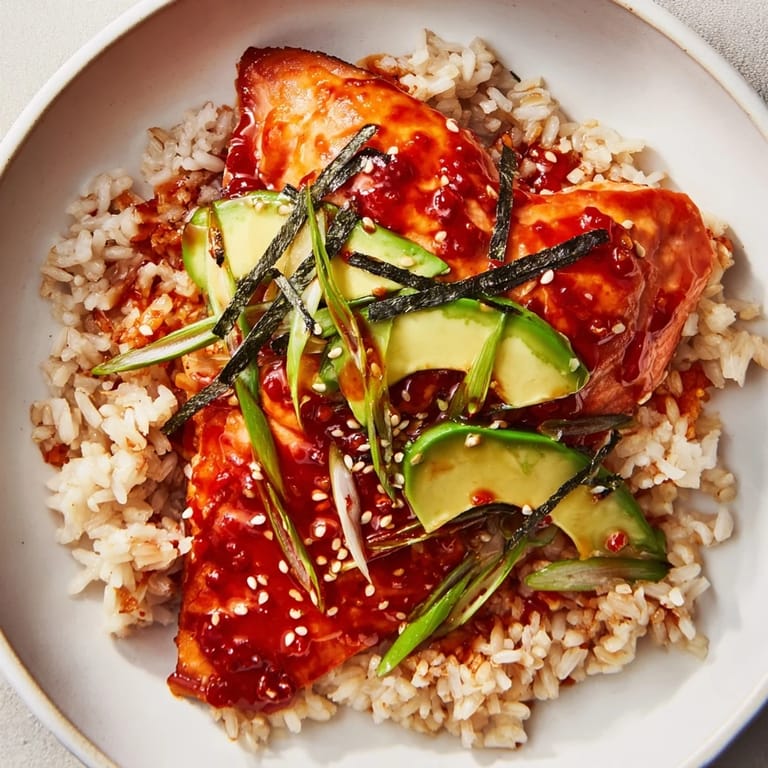
- After the salmon emerges from the oven, brush the remaining glaze over the fillets and run them under the broiler for 1 to 2 minutes until the sauce bubbles and turns sticky and glossy.
- Assemble with intention:
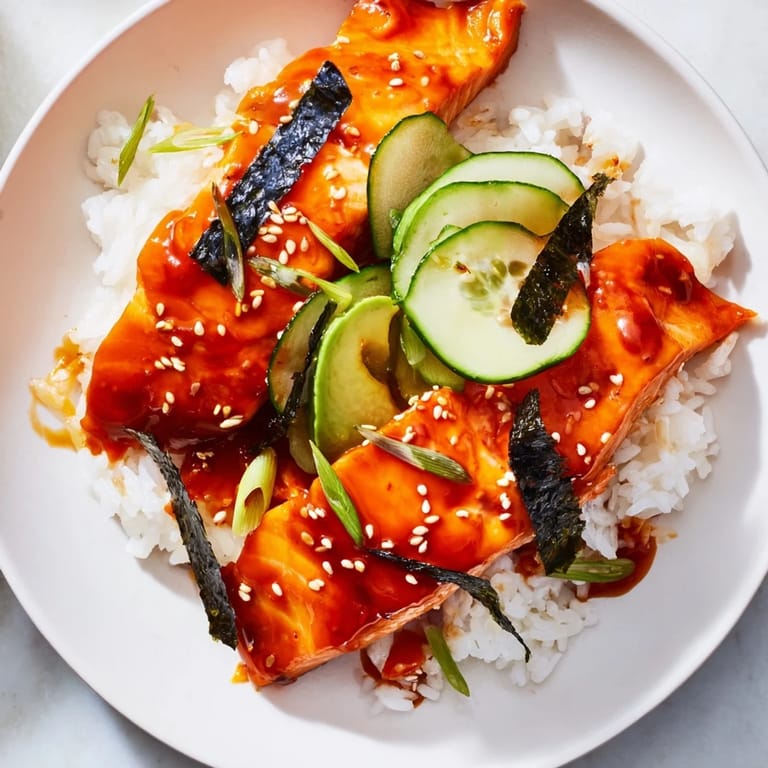
- Divide the warm rice between two bowls, then nestle a salmon fillet into each portion. Arrange the cucumber, avocado, and nori in separate sections around the bowl for visual rhythm and so each spoonful feels different.
- Final flourish:
- Scatter sesame seeds and scallions over the top, then serve immediately while the rice is still warm and the salmon is at its best.
 Merken
 There's a moment when you pull this out of the oven, and the kitchen fills with this warm, complex smell of ginger and orange and toasted sesame, and you realize this isn't just food—it's the kind of meal that makes people put down their phones. That's when you know you've made something worth repeating.
Why the Glaze Works So Well
Gochujang on its own can be intimidating if you've never used it, but paired with citrus and honey, it becomes something balanced and almost approachable. The orange juice cuts through the heat with brightness, the honey softens the spice into something that lingers rather than burns, and the sesame oil anchors everything with a subtle richness. This combination is why the glaze tastes nothing like straight Korean chili paste and everything like a carefully considered flavor.
Building Your Bowl
The magic of this bowl isn't just the salmon—it's the layering of textures and temperatures that happen when you assemble it right. Cold avocado against warm rice, crisp cucumber against tender salmon, the slight chew of nori against everything soft. Every ingredient has a reason for being there, and once you've made this once, you'll start imagining your own variations and swaps.
Customizations and Swaps
This recipe is forgiving and adaptable, which is part of why it became such a regular in my rotation. If you can't find or don't like gochujang, any spicy paste with depth will work. If salmon isn't your thing or you're vegetarian, pressed tofu glazed the same way becomes almost indistinguishable from fish. The bowl format also means you can add or subtract toppings based on what's in your fridge—pickled ginger adds sharp complexity, shredded carrots bring sweetness and crunch, and edamame rounds out the protein if you want extra substance.
- Try a splash of mirin if you don't have honey, or miso if you want umami instead of heat.
- Serve with a crisp white wine like Sauvignon Blanc or a cold beer if you want something to balance the richness.
- Make extra glaze and drizzle it over roasted vegetables or use it as a marinade for chicken the next day.
 Merken
 This bowl found its way into my weeknight rotation because it asks so little of you but gives so much back. Make it once, and you'll understand why.
Fragen rund um das Rezept
- → Wie bereite ich die Orange-Gochujang-Glasur zu?
Verrühren Sie Gochujang, frisch gepressten Orangensaft, Sojasauce, Honig, Reisessig, Sesamöl, geriebenen Ingwer und Knoblauch zu einer glatten Sauce.
- → Wie lange sollte der Lachs gebacken werden?
Backen Sie die mit Glasur bestrichenen Lachsfilets 12–14 Minuten bei 200°C, bis sie zart und flockig sind.
- → Welche Beilagen passen zum Gericht?
Servieren Sie den Lachs auf warmem Reis und toppen Sie ihn mit Gurkenscheiben, Avocado, Nori, Sesamsamen und Frühlingszwiebeln.
- → Kann man den Lachs durch eine vegetarische Alternative ersetzen?
Ja, Tofu eignet sich gut als Ersatz und kann ähnlich mariniert und zubereitet werden.
- → Welche Gewürze sorgen für das besondere Aroma?
Die Kombination aus Gochujang, frischem Ingwer, Knoblauch und Sesamöl verleiht das charakteristische süß-würzige Aromaprofil.