 Merken
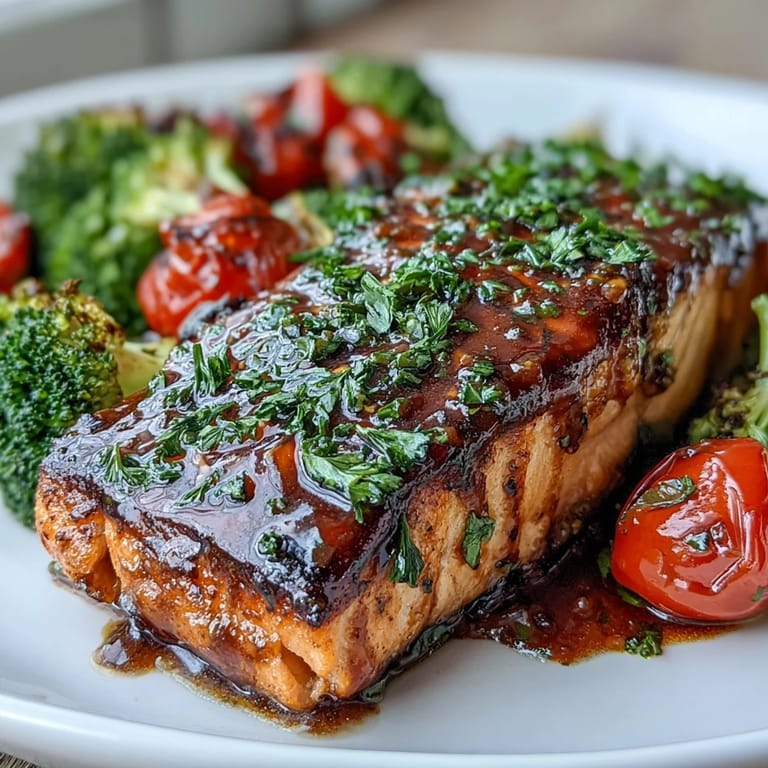
 An ordinary Wednesday evening turned into something special when I discovered that the simplest meals often taste the best. My neighbor had brought over fresh salmon from the farmers market, and I had a handful of vegetables that needed using before they wilted. Instead of overthinking it, I tossed everything onto a sheet pan, drizzled on a quick Dijon glaze, and twenty-five minutes later, dinner was done. That night taught me that you don't need complicated techniques or endless ingredients to feel proud of what you've made.
I made this for my parents last summer, and my dad—who claims he doesn't like salmon—went back for seconds. My mom kept asking what was different about the glaze, and honestly, it's just that balance of mustard's sharpness with a touch of honey and lemon. Watching them both relax at the table, forks clinking against their plates, I realized this recipe had become my go-to when I want to impress without stress.
Ingredients
- Salmon fillets (4 pieces, about 170 g each): Choose fillets that are similar in thickness so they cook evenly, and don't be afraid of the skin—it keeps everything moist and adds flavor.
- Dijon mustard (2 tablespoons): This is the backbone of the glaze, bringing tang and a hint of sophistication without overpowering the fish.
- Olive oil (3 tablespoons total): Good quality makes a difference here since it's tasted directly, not hidden in a sauce.
- Lemon juice (1 tablespoon): Brightens everything and helps the salmon stay tender as it roasts.
- Honey (1 teaspoon): A small amount balances the mustard's sharpness and encourages caramelization on the vegetables.
- Garlic clove (1, minced): Fresh garlic matters more than you'd think—it adds a subtle warmth that ties the whole dish together.
- Broccoli florets (2 cups): They get crispy at the edges and tender inside, developing a nutty sweetness when roasted hot and fast.
- Cherry tomatoes (2 cups, halved): Use the best ones you can find; they'll burst slightly and concentrate into little flavor bombs.
- Red bell pepper (1 large, sliced): The sweetness plays beautifully against the Dijon's bite, and the color makes the whole pan look alive.
- Red onion (1 medium, cut into wedges): Roasting softens its sharp edge while keeping its structure, adding a subtle sweetness.
- Dried Italian herbs or Herbes de Provence (1 teaspoon): Don't skip this; it gives the vegetables depth and keeps the dish from feeling one-note.
- Salt and black pepper: Season the vegetables and salmon separately so both get proper seasoning.
- Lemon wedges and fresh parsley (to serve): These finishing touches feel simple but make people think you spent hours in the kitchen.
Tired of Takeout? 🥡
Get 10 meals you can make faster than delivery arrives. Seriously.
One email. No spam. Unsubscribe anytime.
Instructions
- Get Your Pan Ready:
- Preheat the oven to 220°C and line your sheet pan with parchment paper or give it a light coating of oil. A hot oven is essential—it creates those gorgeous caramelized edges on the vegetables while keeping the salmon moist.
- Build the Glaze:
- Whisk together the mustard, olive oil, lemon juice, honey, minced garlic, salt, and pepper in a small bowl until it's smooth and emulsified. The glaze should smell bright and a little bit tangy, like something you'd want to lick off a spoon (and honestly, no judgment if you do).
- Prep the Vegetables:
- Spread your broccoli, tomatoes, bell pepper, and onion across the sheet pan in a single layer, leaving space for the salmon. Drizzle with olive oil, sprinkle with herbs, salt, and pepper, then toss everything until each piece is glistening.
- Nestle the Salmon:
- Place the salmon fillets skin-side down among the vegetables, and use a brush or the back of a spoon to coat each fillet generously with that Dijon glaze. Don't be shy—the glaze caramelizes beautifully and adds incredible flavor.
- Roast Until Golden:
- Slide the pan into your hot oven for 20 to 25 minutes, depending on the thickness of your fillets. The salmon is done when it's opaque throughout and flakes easily when you press it gently with a fork, and the vegetables should be tender with caramelized, slightly blackened edges.
- Finish and Serve:
- Pull everything from the oven and let it rest for just a moment. Serve immediately with lemon wedges and a generous handful of fresh parsley if you have it on hand.
 Merken
 There's something about a sheet pan dinner that turns a regular evening into something worth remembering. My kids have started asking for this recipe by name, which feels like the highest compliment a cook can receive.
The Magic of the Dijon Glaze
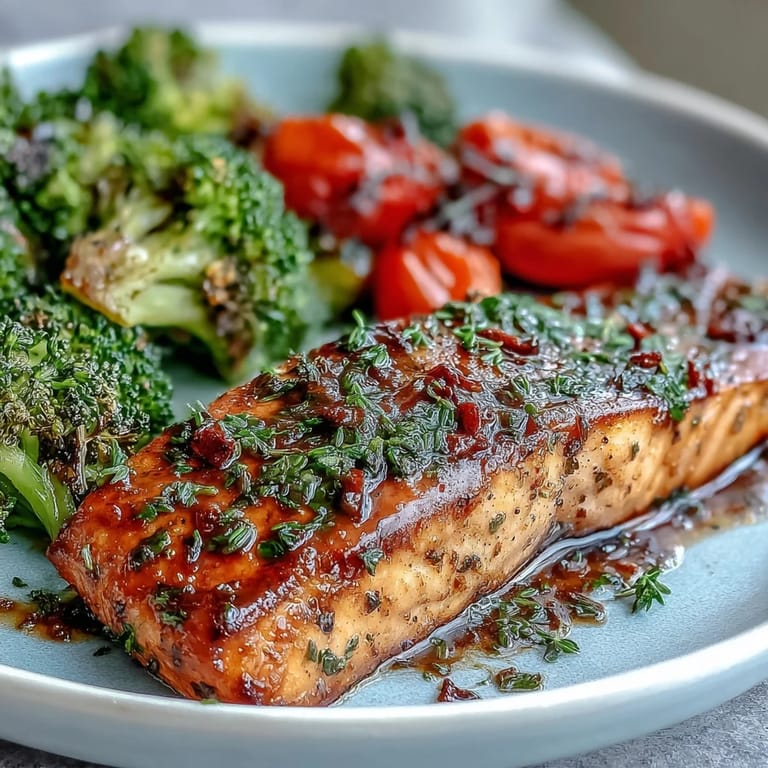
The genius of this glaze is that it looks simple but tastes complex. The mustard provides sharpness, the honey adds subtle sweetness and helps everything caramelize, and the lemon keeps it all bright and fresh. I've learned that if you try to make the glaze too thick or too involved, you lose that delicate balance. Keep it simple, and let the salmon's natural richness do most of the talking.
Vegetable Choices and Flexibility
This recipe is forgiving, which is one of the reasons I love it. Asparagus, green beans, zucchini, or even fennel would all work beautifully here—just make sure whatever you choose is cut into similarly sized pieces so everything roasts evenly. I once swapped in purple cabbage on a whim, and the slight bitterness paired unexpectedly well with the sweet glaze. The key is respecting roasting time and temperature, not overthinking your vegetable selection.
Timing, Temperature, and Troubleshooting
I learned the hard way that 220°C is the sweet spot—any cooler and your vegetables steam rather than roast, losing that caramelization that makes this dish special. If your fillets are particularly thick, you might need an extra few minutes, so keep an eye on them after the 20-minute mark. The salmon will continue to cook slightly after it comes out of the oven, so it's better to pull it when it's just barely opaque in the very center.
- If your pan is crowded, the salmon and vegetables will steam instead of roast—use a larger pan or work in batches if needed.
- Lemon zest sprinkled on the salmon just before serving adds brightness that tastes like a professional touch.
- This dish is best enjoyed immediately while the salmon is still warm and the vegetables are crispy on the outside.
 Merken
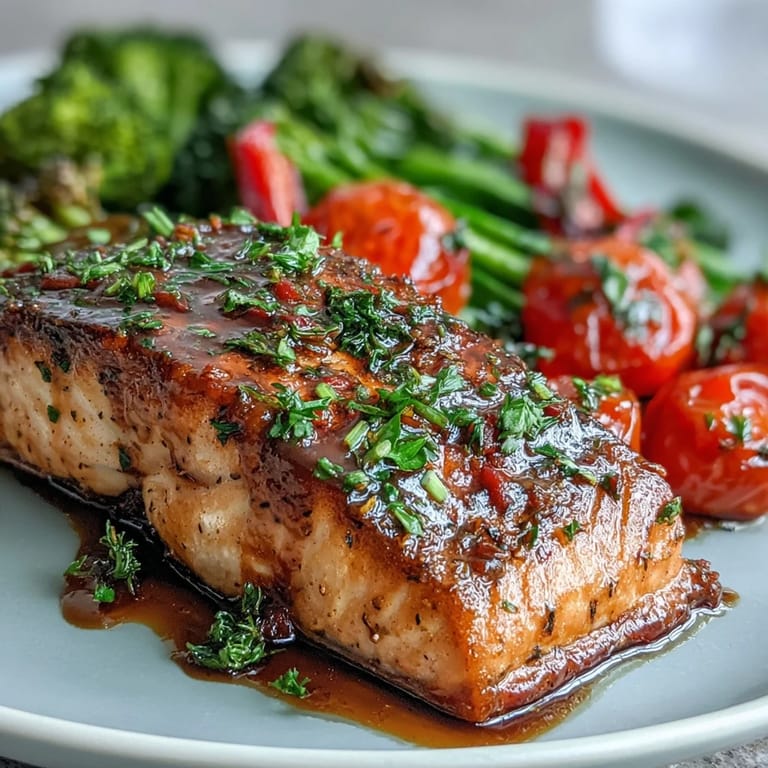
 This recipe has become my answer to the question "What should we make for dinner?" because it delivers restaurant-quality results in less time than it takes to order takeout. It's proof that simple, honest cooking—respecting good ingredients and not overcomplicating things—is where real joy lives.
Fragen rund um das Rezept
- → Welche Gemüse kann ich verwenden?
Sie können Brokkoli durch Spargel, grüne Bohnen oder Zucchini ersetzen. Auch andere Paprikaorten oder Karotten passen gut dazu.
- → Kann ich den Lachs ersetzen?
Ja, Forellenfilets oder Seehecht funktionieren ebenfalls gut. Passen Sie die Garzeit je nach Fischdicke an.
- → Wie lagere ich Reste?
Kühl lagern und innerhalb von 2 Tagen verzehren. Erwärmen Sie den Lachs vorsichtig bei niedriger Temperatur, damit er nicht trocken wird.
- → Welcher Wein passt dazu?
Ein trockener Sauvignon Blanc oder ein ungefährter Chardonnay ergänzen die Senfnoten perfekt.
- → Ist das Gericht glutenfrei?
Ja, alle Zutaten sind natürlich glutenfrei. Achten Sie darauf, dass der verwendete Senf keine Glutenzusätze enthält.
- → Kann ich die Glasur anpassen?
Für mehr Schärfe fügen Sie etwas Cayennepfeffer hinzu. Eine Veganer-Variante erhält man durch Ersatz von Honig mit Ahornsirup.