 Merken
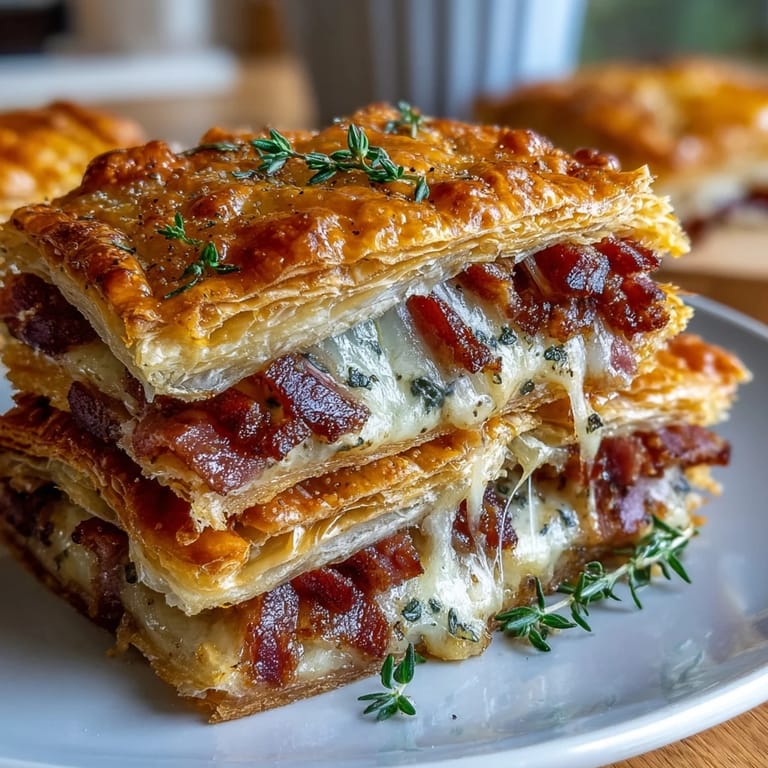
 There's something magical about watching puff pastry transform in the oven—one moment it's a flat, unassuming rectangle, and the next it's puffed into golden, flaky layers that shatter when you bite into them. I discovered these ham and cheese stacks on a Tuesday afternoon when I had leftover deli ham and a thawed sheet of pastry, and honestly, I was just trying to avoid another boring sandwich. What emerged was something so crispy and satisfying that it became my go-to whenever I needed to impress without spending hours in the kitchen.
I made a batch of these for my sister's lunch gathering last spring, and I remember the kitchen filling with this buttery, toasted aroma that had everyone asking questions before they even sat down. Watching people's faces light up when they bit into one—that crispy exterior giving way to warm, melty cheese—reminded me that sometimes the simplest combinations are the ones people remember. They disappeared faster than I could plate them, which honestly felt like the highest compliment.
Ingredients
- Puff Pastry (1 package, about 17.3 oz / 490 g, thawed): Thawing at room temperature matters more than you'd think—it prevents the layers from tearing when you cut and helps them puff evenly in the oven.
- Ham (8 slices, about 6–8 oz / 170–225 g total): Deli ham works beautifully because it's thin enough not to overpower the flaky pastry, but good quality matters since it's a star ingredient here.
- Cheese (8 slices, about 6–8 oz / 170–225 g total, Swiss, Gruyère, or Cheddar): Swiss and Gruyère bring a subtle nuttiness that pairs perfectly with ham, though Cheddar adds a sharper note if that's more your style.
- Dijon Mustard (2 tbsp): This isn't just a binding agent—it's the flavor secret that keeps things from tasting one-dimensional.
- Egg Wash (1 large egg + 1 tbsp milk): This creates that glossy, golden finish that makes people think you spent way more time on these than you actually did.
- Salt, Freshly Ground Black Pepper, and Fresh Herbs (thyme or rosemary, optional): A light hand with seasoning is key since the ham and cheese already bring salt to the party.
Tired of Takeout? 🥡
Get 10 meals you can make faster than delivery arrives. Seriously.
One email. No spam. Unsubscribe anytime.
Instructions
- Set Your Oven and Prep:
- Preheat your oven to 400°F (200°C) and line a baking sheet with parchment paper—this prevents sticking and cleanup is almost painless. You're building the foundation for golden, even cooking.
- Prepare the Pastry:
- Lightly flour your work surface and roll out the thawed pastry sheets just enough to smooth any creases and enlarge them slightly. The goal isn't aggressive rolling, just gentle encouragement to make them a touch bigger.
- Cut Into Squares:
- Using a sharp knife or pastry cutter, divide each sheet into 4 equal squares—you'll end up with 8 total. Clean, confident cuts help the pastry puff more evenly.
- Make Your Egg Wash:
- Whisk together the egg and milk in a small bowl until well combined. Set it aside; you'll use this later to give your stacks that restaurant-quality sheen.
- Build the Filling:
- Spread a thin layer of Dijon mustard on 4 of your pastry squares—think less is more here. Top each with a slice of ham, then a slice of cheese, and season lightly with salt, pepper, and fresh herbs if you're using them.
- Seal the Stacks:
- Cover each filled square with another pastry square and press the edges gently to seal, then crimp around the perimeter with a fork. This secures the filling and creates a lovely pattern.
- Brush and Arrange:
- Brush the tops of all your stacks with the egg wash, then arrange them on your prepared baking sheet with a little breathing room between each one. This space lets heat circulate and keeps them crispy on all sides.
- Bake Until Golden:
- Bake for 20–25 minutes until puffed and deep golden brown. You'll see them rise and hear a subtle crackle—that's the sound of success.
- Rest and Serve:
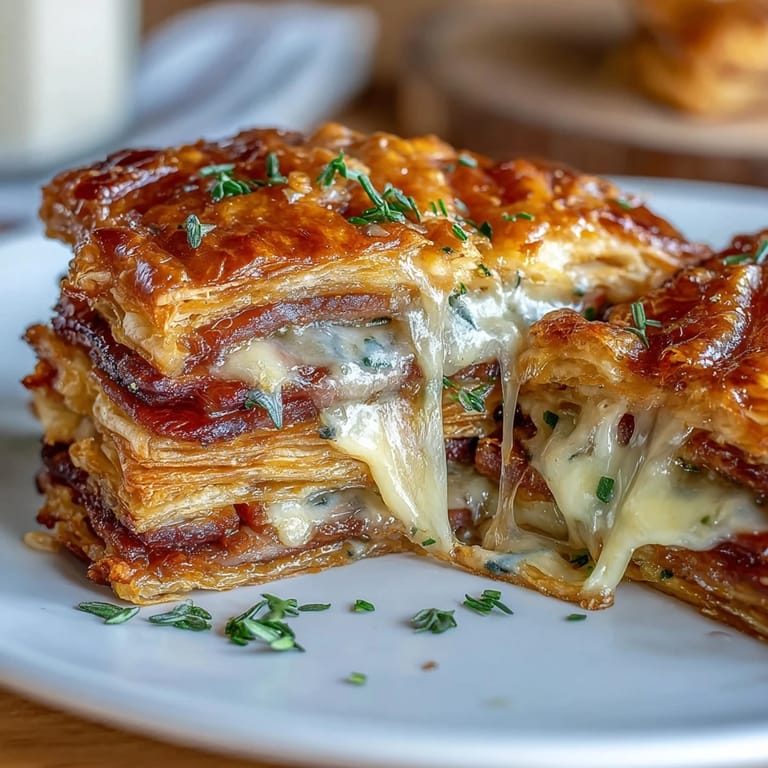
- Let them cool for 5 minutes before serving; this brief rest lets the cheese set slightly so it doesn't spill out when you cut into them. Warm is when they're at their absolute best.
 Merken
 There was a moment during one weeknight dinner when my partner bit into one of these and just closed their eyes, and I realized that food doesn't need to be complicated to be memorable. These stacks proved that sometimes the best meals are the ones where simple, good ingredients meet a technique that actually works.
Flavor Combinations Worth Trying
Once you nail the basic version, the possibilities open up in the best way. Pepper jack cheese with a thin slice of tomato brings a summer freshness, while caramelized onions (toss them with a touch of balsamic vinegar) add a deep, sweet complexity that transforms the whole thing. I've also experimented with smoked ham paired with sharp Cheddar and a tiny dab of whole grain mustard, and it hits differently—less refined, more rustic and satisfying.
Serving and Storage Strategies
These are absolutely best served warm, right out of the oven when the pastry is at its crispiest and the cheese is still melting. If you have leftovers—which is rare in my house—a toaster oven reheat for about 5 minutes restores most of the crispiness; a microwave will make them soggy, so resist the temptation. A simple green salad or a warm tomato soup on the side rounds out the meal beautifully without overwhelming the delicate flavors of the stacks.
Making Them Ahead
You can assemble these completely a few hours before baking and refrigerate them on the baking sheet covered with plastic wrap. Cold stacks actually bake more evenly, and there's something wonderful about being able to just pop them in the oven when guests arrive. I've learned that this make-ahead quality is why I keep coming back to this recipe—it removes the stress without sacrificing anything in terms of flavor or texture.
- Assembled stacks keep in the fridge for up to 4 hours before baking.
- You can freeze unbaked stacks for up to 2 weeks; bake straight from frozen, adding just 5 extra minutes to the cooking time.
- Never microwave leftovers if you want to preserve that signature crunch.
 Merken
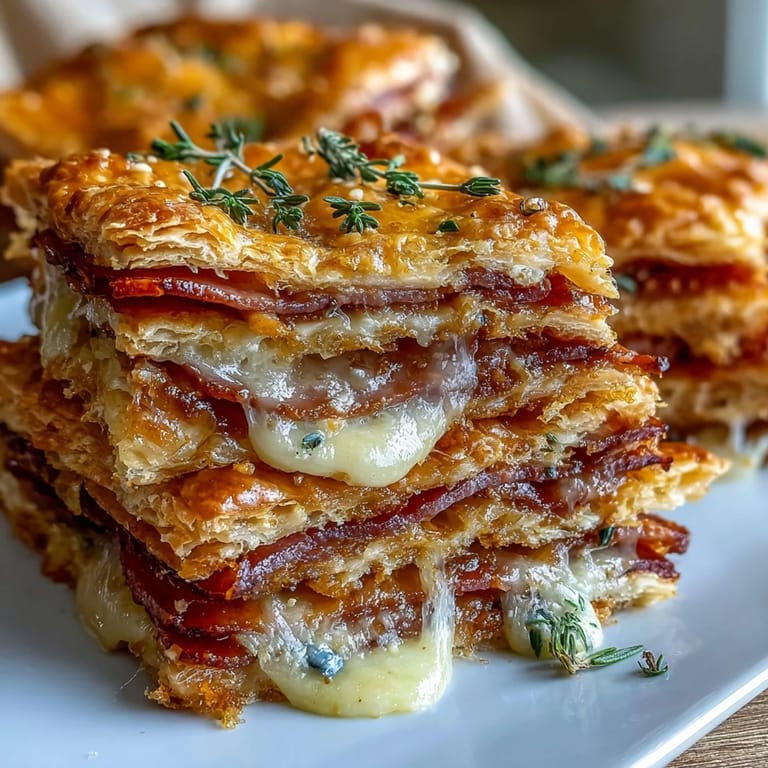
 These ham and cheese puff pastry stacks have become my secret weapon for making people happy quickly. Whether it's brunch, lunch, or a light dinner, they remind me why I fell in love with cooking in the first place.
Fragen rund um das Rezept
- → Welcher Käse eignet sich am besten für die Blätterteigstapel?
Gruyère, Schweizer Käse oder Cheddar sind ideal, da sie gut schmelzen und einen kräftigen Geschmack haben. Mozzarella funktioniert für eine mildere Variante, während Pepper Jack eine würzige Note bringt.
- → Kann ich die Blätterteigstapel vorher zubereiten und später backen?
Ja, die zusammengestellten Stapel können bis zu 24 Stunden im Kühlschrank aufbewahrt werden. Vor dem Backen kurz auf Raumtemperatur kommen lassen, damit der Teig gleichmäßig gart.
- → Wie vermeide ich, dass der Teig zu dunkel wird?
Halten Sie die Backzeit im Auge und überprüfen Sie nach 20 Minuten. Bei zu schneller Bräunung können Sie die Stapel locker mit Alufolie abdecken.
- → Lassen sich diese Stapel einfrieren?
Ungebackene Stapel können bis zu 3 Monate eingefroren werden. Backen Sie sie direkt aus dem Gefrierzustand, erhöhen Sie dabei die Backzeit jedoch um 5-10 Minuten.
- → Was passt gut als Beilage dazu?
Ein frischer grüner Salat mit Vinaigrette, Tomatensuppe oder ein leichter Rote-Bete-Salat ergänzen die herzhafte Note perfekt.