 Merken
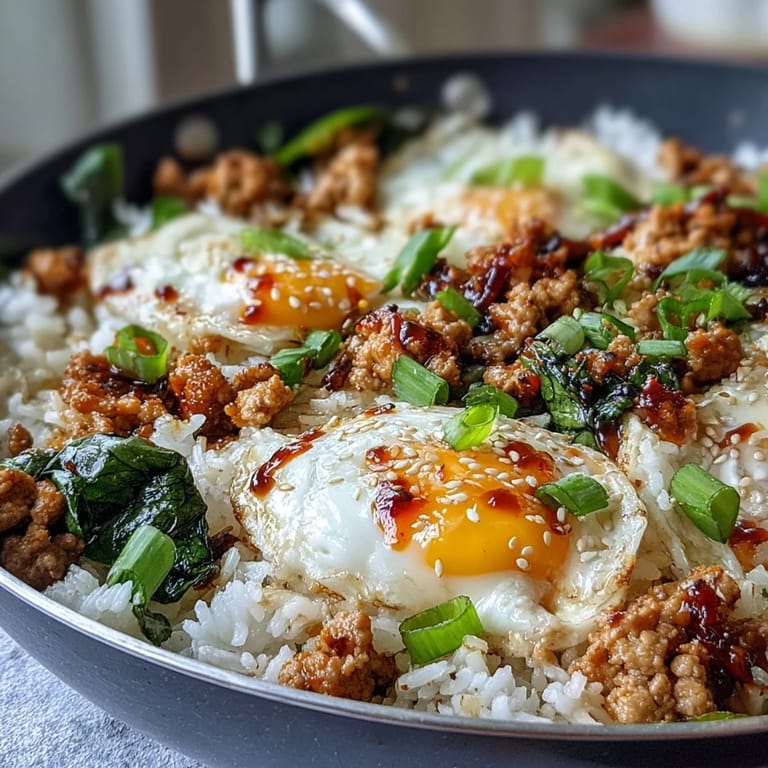
 One Tuesday evening, I was standing in my kitchen staring at a container of ground turkey and wondering what could possibly make it exciting when my friend texted me a photo of her bibimbap bowl. That golden yolk catching the light made something click, and I started imagining that same richness applied to something warmer, creamier, more casual. Within minutes, I had gochujang in one hand and sesame oil in the other, and this skillet came together like I'd been making it for years.
I made this for my roommate on a random Thursday when she'd had a rough day at work, and watching her face when she cracked into that egg told me everything I needed to know. She asked for the recipe before she'd even finished the bowl, and now it's her go-to when she needs something that feels like a hug but doesn't require actual effort.
Ingredients
- Ground turkey (1 lb): This lean protein soaks up the sauce beautifully, and breaking it into small pieces as it cooks helps it absorb all those bold Korean flavors.
- Yellow onion, garlic, and fresh ginger: These three are your flavor foundation, and taking the time to mince them fine means they'll distribute evenly throughout the dish instead of hiding in chunks.
- Carrot (1 medium): A gentle sweetness that plays well against the spicy gochujang, and dicing it small means it softens quickly without waiting.
- Baby spinach (1 cup): It wilts down to almost nothing, so don't be shy with the amount—it mostly becomes color and nutrition.
- Gochujang (2 tbsp): This Korean chili paste is the heart of the dish; if you can't find it, you're missing the soul, so don't skip it.
- Soy sauce, honey, and rice vinegar: Together these create that sweet-salty-tangy balance that makes each spoonful interesting.
- Toasted sesame oil (1 tbsp): Use the good stuff here because you're using such a small amount that quality actually matters.
- Chicken or vegetable broth (1/2 cup): This thins out the sauce so it coats everything evenly rather than sitting as a thick paste.
- Heavy cream or coconut cream (1/4 cup): The secret ingredient that transforms Korean spice into something creamy and luxurious.
- Cooked white rice (3 cups): Day-old rice works better than fresh because it's drier and won't get gummy when mixed in.
- Large eggs (4): The jammy yolk is not optional; this is what makes people ask for seconds.
- Green onions and sesame seeds: These finish the dish with color, texture, and a little bit of raw brightness.
Tired of Takeout? 🥡
Get 10 meals you can make faster than delivery arrives. Seriously.
One email. No spam. Unsubscribe anytime.
Instructions
- Get your aromatics going:
- Heat your skillet over medium heat, add a splash of sesame oil, then watch as the onion, garlic, and ginger start to soften and perfume your entire kitchen. This smell—that combination of sweet and sharp—is how you know you're on the right track.
- Brown the turkey:
- Add your ground turkey and break it apart with a spatula as it cooks, letting it get golden and cooked through. If you leave it in clumps, you'll end up with turkey chunks instead of a sauce that clings to every grain of rice.
- Add the carrots:
- Give them just a couple minutes to start softening before you move on, so they're tender rather than crunchy in the final bowl.
- Mix your sauce:
- In a small bowl, whisk gochujang, soy sauce, honey, rice vinegar, and broth until the paste breaks down and everything is smooth. Pour this into the skillet and stir until every piece of turkey is coated in that beautiful red sauce.
- Wilt the spinach:
- Lower the heat and add your spinach, watching it collapse into tenderness in just a minute or so, then stir in the cream and rice. Let it all warm together for a couple minutes so the flavors get to know each other.
- Cook your jammy eggs:
- While everything simmers, boil water in a separate pan and gently add your eggs, setting a timer for exactly 7 minutes. Too short and the yolk runs everywhere; too long and you lose that jammy magic.
- The finishing moment:
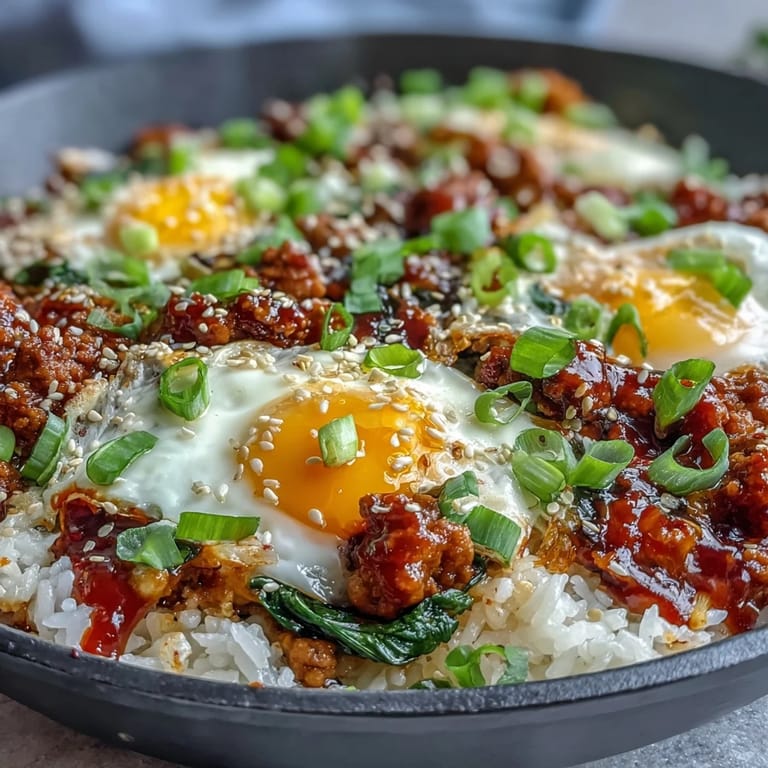
- Transfer those eggs to an ice bath so they stop cooking, peel them carefully, halve them, and nestle them on top of your creamy rice skillet with a scatter of green onions and sesame seeds.
 Merken
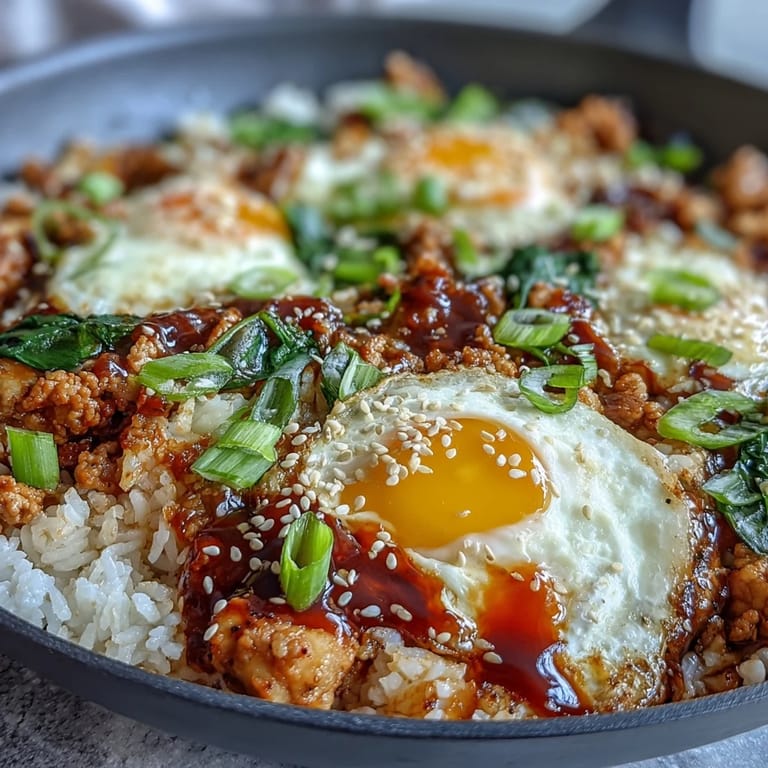
 There's something almost meditative about watching that egg yolk break into the creamy rice, the way it all comes together in that first bite. It stopped being just dinner and became the reason I started planning my week around having this on a regular rotation.
The Sauce Strategy
The magic happens when you let that gochujang fully dissolve into the broth before pouring it into the skillet, because lumpy chili paste scattered through the dish creates hot spots instead of even flavor. I learned this the hard way when I was impatient one night and ended up with some bites that were mild and others that felt like my mouth was on fire.
Rice Selection Matters More Than You'd Think
Using leftover rice from the night before means it has time to dry out slightly, which lets it absorb all the creamy sauce without turning into porridge. I keep a container of rice in the fridge specifically for dishes like this because fresh rice straight from the pot is too starchy and creates a gluey texture that doesn't feel right.
Making This Your Own
The beauty of this skillet is how forgiving it is if you want to improvise—swap the ground turkey for chicken or pork, adjust the gochujang depending on how spicy you want things, or add a spoonful of kimchi on the side for extra funk and fermented brightness. Some people drizzle a little extra sesame oil over the top just before eating, others add a squeeze of lime juice to cut through the richness.
- If you're dairy-free, coconut cream swaps in seamlessly and adds its own subtle sweetness.
- You can prep all your vegetables ahead of time so cooking becomes just assembly and waiting for eggs.
- Leftovers keep well in the fridge for a couple of days, though the egg is best eaten fresh.
 Merken
 This skillet has a way of becoming comfort food that feels exciting at the same time, the kind of meal that works on a busy Tuesday or when you need to impress someone with minimal fuss. Once you make it once, you'll find yourself coming back to it again and again.
Fragen rund um das Rezept
- → Kann ich Gochujang durch etwas anderes ersetzen?
Ja, Sie können Sriracha oder Sambal Oelek verwenden, allerdings verändert sich leicht der authentische koreanische Geschmack. Für eine mildere Variante reduzieren Sie die Menge einfach um die Hälfte.
- → Wie bekomme ich das perfekte weiche Ei?
Kochen Sie die Eier genau 7 Minuten in sprudelndem Wasser, dann sofort in Eiswasser abschrecken. Durch den Schock stoppt der Garprozess und das Eigelb bleibt schön cremig.
- → Ist dieses Gericht scharf?
Der Gochujang verleiht eine milde bis mittlere Schärfe. Sie können die Menge nach persönlichem Geschmack anpassen - weniger für eine mildere Variante, mehr für mehr Würze.
- → Kann ich frischen Reis verwenden?
Ja, aber am besten funktioniert tagalter Reis. Frischer Reis enthält mehr Feuchtigkeit und kann das Gericht etwas klebrig machen. Wenn Sie frischen Reis verwenden, reduzieren Sie die Flüssigkeit leicht.
- → Wie lange hält sich dieses Gericht im Kühlschrank?
Das Gericht hält sich im verschlossenen Behälter bis zu 3 Tage im Kühlschrank. Das weiche Ei sollten Sie jedoch separat aufbewahren und erst beim Servieren hinzufügen.